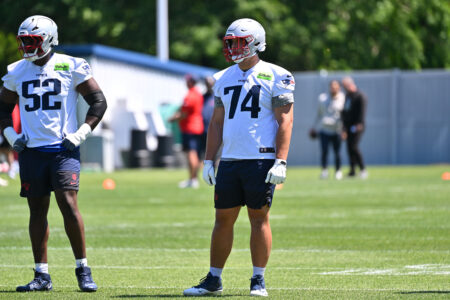
Hightower needs to play at 255 at the most....Every elite 4-3 lb is 235-250. There r none playing at 270. Hightower must gain a couple steps if he is 2 take his game to the next level and at least honorable mention when listing the best lbs.
Jones should add 10-15 lbs of muscle and maybe even lean out by 10 lbs. He is almost there as an elite rusher. Half step quicker n a little stronger I think shows up in his game. He is good,but shut down way to often. He works hard with his brother who knows the advantage of being as strong as u can at your most productive weight ratio.
Collins is plenty lean n quick,he just needs 10-12 lbs of muscle. He is explosive,athletic n powerful 4 his weight already. A little more muscle n he could hit double digit sacks from his old spot. Not many teams would stop him on a blitz.
This may seem a stretch but the r young growing athletes. Losing 10-15pounds of bodyfat and adding 10 lbs of muscle isn't out of question or time consuming and is amazing how much stronger and more effective small tweaks in nutrition/training makes. i seen many non athletes training for first time add 10-15 lbs of muscle in well under a year so its very easy for young athletes who r still growing.
...
Even a mere 15\16 lbs of fat slows you down CONSIDERABLY. Be it carried in the belly or distributed evenly giving muscles a smoother less defined appearance. Leaning out and adding SOME muscle IS an undeniable advantage for that player. More quickness more power meaning more explosiveness Period. Why do you think players use PEDs.
...
If pot bellied couch potatoes can start nutrition/diet,training and tae kwan do to become stronger,quicker and more flexible then there's improvement within pro athlete's as well. Couple yrs ago I wasn't going to the gym for a good while and ate whatever I wanted and gained almost 20 lbs. I felt slow when I played sports or did any running and thought it was normal as I hit my 30s. I mean I blamed some of it on being a little out of shape. But by the average Americans standard I was still in pretty good shape. So I thought losing quickness was partially due to getting out of shape but Noway could it account for all of feeling slow and losing speed and quickness. When I got back in shape lifting ant eating better I felt 23 again and shocked myself on how much faster I was again and how easy it was to run. I just thought wow only if everybody could feel this difference. I had no idea carrying 15-20 lbs of fat could do that. And I now understood at the time what the nutritionist I saw was talking about that so many athletes don't realize how good they could really be. It comes down to losing excess fat and adding enough muscle for power without to much to slow you down.
[/QUOTE]
Ok, Gymrodent (thanks, Joker ), you've been spewing like a born-again CrossFitter on a half-dozen threads, and it's getting old. Start a new thread if you want to compare training philosophies, and keep it in one place. Better still, do it over at T-Nation, where folks who have run D1 weight rooms can provide a proper response and educate your mouse brain. I will try this once here. After that, I will return to discussing football here and quietly train for the Zombie Apocalypse in my gym.
There's a world of difference between training an elite athlete and turning a coach potato into a functioning human animal, and there's much more to consider than strength-to-weight ratio in training an NFL football player. The room for improvement in somebody like Jones is remarkably thin. A body-building protocol to put mass on his legs (the area where he feels he needs to improve his strength) has a decent chance of slowing him down at the same time that it adds strength to his bull rush. He will train for explosiveness and strength, which will probably put a little weight on him, but not if he worries about trimming his negligible fat. The margins are too thin at that level of training to be doing two things at once, especially when they are oppositional (adding one kind of weight here and losing another elsewhere). Chandler knows more about training than you can ever expect to, and he's working with folks who know far more than him. Your incessant opining about what he needs to do in the gym in the off-season to dominate on game day is worse than the folks who never played football guessing about whose assignment as blown and assigning blame definitively in the postgame threads.
Wrt Hightower, he might benefit from a leaner physique, but he might not. If BB wants him to be able to play 3-4 OLB and stand-up a OT at the point-of-attack or run blitz and knock a pulling guard on his ass, that extra mass is useful. Football is much more about leverage and momentum than raw strength. Speed is great both in it's own right because it provides momentum. However, in small spaces especially against the run, size can be an asset, because it makes you harder to move. I'm sure the team will set weight goals for him. He's enough of a pro to hit them. If he shows-up at 270, you can assume that the team likes him that size, and I'm happy to appeal to the authority of Coaches Belichick and Harold Nash on that point.
Lastly, unlike body builders, football players have use for intramuscular fat. If they get lean and shredded, they lose some of their glycogen storage capacity. That muscular glycogen is a primary source of energy for the short, intense efforts that characterize a football play. Furthermore, there is evidence that moderate levels of fat provide some injury protection, likely by providing energy reserves through the demands of training, practice, and games and thereby reducing overall stress on the body. If you lean-out too much or too fast, it can effect hormone levels or performance and open a player up to injury. Everybody is a little different, and I'm not in the training room working with these guys on a daily basis, so I'm going to reserve judgment on what they each need to do. You should take a slice of humble pie and learn to do the same.