We have a weird phenomenon here where people insist player X Is under contract and believe that a piece of paper is going to compel them to show up and play a violent sport.
Let’s play this out. You’re the team owner and I’m the player. You insist I should honor my contract, practice and play, despite having zero guaranteed dollars left on my contract.
My agent convinces me so I show up for work, get out on the practice field and start running… dohhh, ouch I just hurt my hamstring and can’t practice or play anymore. Be sure my paycheck arrives on time.
That you believe a piece of paper guaranteeing nothing holds power over people is where you’re confused. These people aren’t slaves or mindless robots. An NFL team can cut a player at a moment’s notice, the player only has to honor the guaranteed money on his contract.
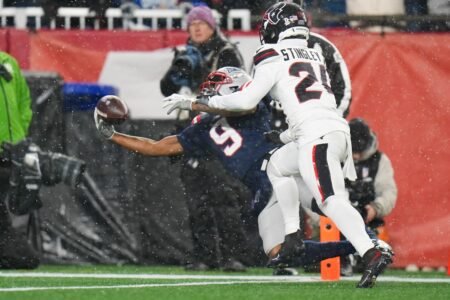
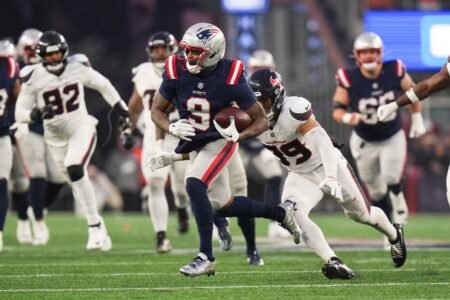
Secondly, I said a team trading for a player then giving him a massive new contract is not smart. And I was very exact with my words. If Boutte was worth a 4th round pick, but he’s in the last year of his previous contract and won’t play without a new contract, he is now worth a 6th.
If I have to pay him a massive contract and signing bonus, then the trade compensation is lower. If he has a couple years left on his prior contract and all I have to do is pay his salary then he is worth a 4th… at best.
When you do both, you just paid twice for the same player. I could have just used that draft pick on a rookie WR with a cheap, cost controlled contract for the next four years. You’re not just trading for the player, you’re trading for his contract.
It’s not an argument, it’s common sense practice in the NFL.
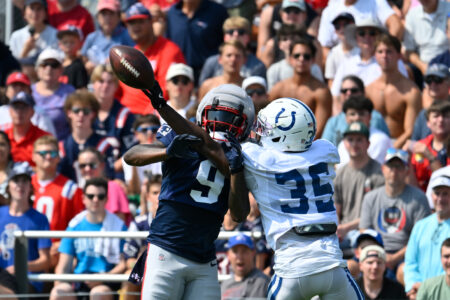
1. Boutte wasn't holding out. he was enthusiastically participating in all practices/preseason games. Your considered analysis, such as it is, that contracts are made out of paper, is therefore not in point.
It's also absurd on the face of it. In your next breath you say you're not just trading for a player., you're trading for a contract. Well, if it's just a piece of paper, who cares? Nobody will honor an inconvenient one, and there's no branch of the law dealing with contracts, so you're just SOL unless the player and team both feel that day that it's a fair deal.
Reality: although there is such a thing as a holdout, the much-maligned "piece of paper" - the contract - is , despite breaches, the basic legal instrument governing player pay. That's not to say that people won't breach contracts or find convenient yet legal ways to get around their obligations.
But given that Boutte was showing every sign of playing for his contracted amount this year, your ridicule for those who point out contractual obligations is not applicable here, to our knowledge.
Yes, players can go outside of their contractual obligations. Their ability to do so has a lot to do with whether they are premier performers. Boutte was mid.
2. Please refrain from grand statements regarding what I "believe." You can say what
you believe all you want. As it happens, you expressed an inaccurate guess at my inner musings, beginning with the phrase "you believe...." But beyond the inaccurac\\y, it's presumptuous. Argue from what I've said, and you'll be much more likely to capture the nut of any disagreement.
3. quoting you...
"Secondly, I said a team trading for a player then giving him a massive new contract is not smart. And I was very exact with my words. If Boutte was worth a 4th round pick, but he’s in the last year of his previous contract and won’t play without a new contract, he is now worth a 6th."
Sure, teams like to pay a proven performer as if he were an unproven prospect. Sure, with Boutte, you only get to do that for one year. For one year, you get proven production cheap. After that, you're negotiating a contract. Of course you'd like 4 years of that, but that's impossible on a 4 year deal. Failing that, how about 3 years? But then he'll only have evidence of being serviceable that 1 year. After two years, perhaps there's a sweet spot: Two straight years of proof of usefulness, two years of low-cost production. Then with 3 years you have clear proof he can do it year-in and year-out, but also you have less cheap production left.
So where do these valuations of yours come from? "If" he were worth a 4th before? Why do you think that he was? Do you have a draft day-style chart that says "prospect who becomes team's #2 - #2a receiver is worth a 4th after one year of performance, a 5th after 2, and a 6th after 3, because he loses the value of contracts the new team does not have to write"?
If anything, he is
more proven after three years of good performance. So acquire him after 1 year., you have lots of years to find out cheap. Get him after 3, and you know what you're buying, but you have to reup sooner.
So show me the charts, don't tell me what I believe. Show me some kind of compendium of similar deals. Show me how a 6th round pick is considered a good price for a proven role-player, even one you have to pay or cut soon.
Strikes me they're doing it sooner than later, taking a relative loss in value, and making room for some improvements elsewhere, picking up some box safety depth, and taking the hit where they can best afford it, at WR.
Houston needs our receiver more than I perceive us as needing this specific safety. This trade looks like we need the safety much more, since he is unproven. Oh wait, since he's never done anything of note he must be the better value - how long's he never done anything? Just 1 year right? Then he must be the best value in the league.
I didn't scout him, and I personally don't see what Vrabes is seeing every day on the practice field in terms of our need.
Lots of possible inputs here. While it is cheaper to buy a contract closer to the time a player is drafted, it is at best one of a number of inputs.
Otherwis, every rookie trade would be causing Ricky Williams-size upheavals.