Ok, here are some interesting uniform origin tidbits for you folks. In the 1950's TV era, uniform striping on professional jerseys were based on region and university design. For example, eastern teams (Giants, Eagles, Redskins) had no stripes on their sleeves. The only switch were the Giants road which sported the Northwestern stripes they currently wear. Teams in the Central (Cleveland, Detroit Pittsburgh, Green Bay, Chicago) all wore variations of what is known as Northwestern striping (named after the University). One thin stripe followed by one thick stripe followed by one thin stripe. Cleveland which came out of the AAFC just wore three brown stripes surrounding the orange stripes. GB had white in the middle of theirs while Pittsburgh, and Detroit just had he jersey color in between. Chicago maintained their three stripe pattern from the 1920's. In the west The Colts (thats right) and the 49ers both used what is known as the UCLA stripe that was worn by western colleges at the time. The 49ers switched to the three striope look in 1963. The Rams actually wore the UCLA stripe on their road white jersey while using the Northwestern striping on their blue home and alternative gold jerseys. Remember, the Rams came from Cleveland so they kept the midwest striping.
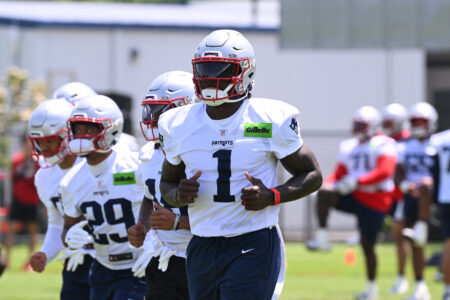
Fast forward to the 1960's. The numbers that appear on the shoulders and sleeves were called TV numbers so the spotters an fans could see them clearly. Also, except for the Cowboys, Colts, Browns and Rams, all teams wore their dark jerseys at home and their whites on the road. (The league mandated that the Cowboys wear their blue jerseys for Super Bowl V, a mandate that has since been changed). Monochrome looks were against the uniform policy with the exception of ONE game the Vikings wore purple on purple. (And they changed to that look at the half).
The interesting thing is since the adaptation of all the new looks, the design of the jersey which was simplistic in most cases for easy television viewing has now morphed into putting as many colors and number shadowing as possible. This was to satisfy the growing retail boom where wearing jerseys was fashionable and marketing them became shrewd business for teams. Unseen on television were 5 lines of shadows on the Ravens 1996 jersey (Gold, black white, purple, gold then jersey number. The Miami Heat held the record with 6.
That would explain why such nice traditional jerseys as the Broncos orange and the 49ers red were discarded for drop shadows, and Navy with Nike swooshes.
Here endedth the lesson.
Next week: Facemasks