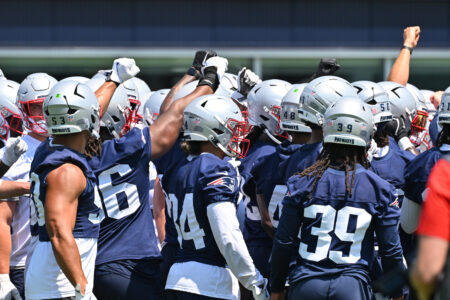
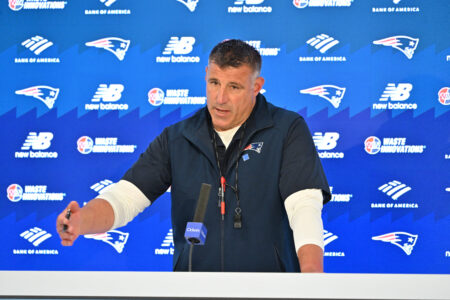
Ted Johnson on Tom Brady departure and the lead up to the Harry trade request: “I think the Patriots, quite honestly, have lost that thing that makes them the Patriots,”
Basically, Brady was the buffer that kept guys in line and covered up Bill’s “warts”. Now that’s he’s gone, you see players like Harry complaining publicly.
There’s more interesting thoughts but I don’t won’t to copy and paste the entire article.
The New England Patriots had an ecosystem that worked, and it worked for two decades with Tom Brady at the helm. Since Brady's departure last offseason, Bill Belichick hasn't had the same control and pull that was apparent with Brady around. N'Keal Harry's recent trade
patriotswire.usatoday.com
Pure garbage.
Law tried to shoot his way out of town.
Branch shot his way out of town.
Mankins called out the org.
Michael Bennett acted like an idiot.
All occurred when Brady was here.
Harry is just an idiot.
Just had to chime in on this BS take from Ted Johnson.
Patriots Hall of Famer Willie McGinest won’t jump into the Brady/Belichick debate because he doesn’t consider it a fair question.
www.bostonherald.com
Willie's take on the Patriot Way:
“Is Tom one of the greatest examples of the Patriots Way? Hell, yes. He is a product of that system. But it was in him to want to invest in all the things that were put in place.”
“I think if you talk to any player who played when that culture was created, and the foundation was set by ownership, our coaching staff, our personnel, (former personnel executive Scott) Pioli, everybody that was there, and the players that were kept from the old regime and the new players that were added through the draft and free agency,”
During his first season in New England, the Patriots played losing football at 5-11 but managed to change the direction of the franchise.
www.espn.com
The 2000 season:
Scott Pioli, vice president of player personnel: "That year was about installing a culture. If you weren't all-in, you were out."
Chad Cascadden, a former Jets linebacker who signed with New England that spring: "The conditioning test; there were a number of different guys that did not make it. The punishment was you couldn't practice until you passed it. You had guys having to retake the test every day until they passed. It was like, 'Wow! Come on!'"
Otis Smith, cornerback: "Everybody had to abide by the same rules. If [quarterback] Drew [Bledsoe] screws up, Bill would get on him just like if Otis screws up. He would put it on the big screen and say, 'This is why we're not winning, because we're not performing at the right time. When it's your time to make a play, make that play.' That was the culture he was trying to set and it didn't matter who the player was."
Woody: "He was just weeding people out. We had a very veteran team, and it was a way of shedding dead weight, guys who had been in the league a long time. His method was, 'You know what? I'm going to put these guys through hell and there will be people who fall by the wayside. The guys who survive, those are the guys we'll ride it out with and see how they do.'"
Chatham: "If I remember correctly, and maybe I'm exaggerating, they cut down to maybe 47 players. Generally teams will cut down to 51-52, and then add a couple players from other teams. There were several of us who weren't with the team in camp, and then showed up, practiced for three days, and lined up to play against Tampa in that first game. My head was spinning."
Pioli: "The salary cap was a disaster. When we got there, we were $10.5 million over the cap and we had only 41 players under contract. Think about that. There were some weeks where we had only 51 guys on the roster, but some of that was a message. One of the things we wanted to eliminate was entitlement. You weren't handed jobs, you had to earn them."
Seely: "The first thing I remember thinking about Tom Brady was that he wasn't very good. We would have opportunity practice at the end, and we'd have a 7-on-7 drill in the red zone, or 1-on-1s. Whenever Tom was throwing the ball, we'd always bet on the defensive backs."





 instagram.com ·