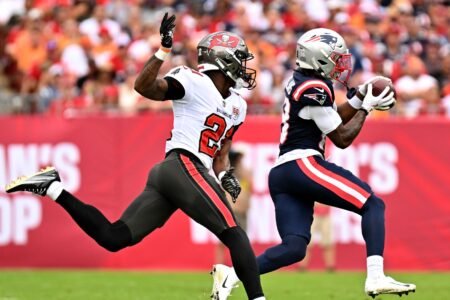
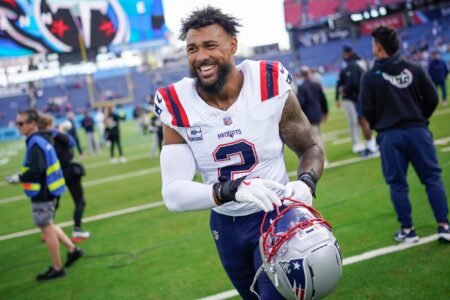
Butler’s absence was huge. Not only was Chung, a safety, now essentially the No. 3 corner caught in a tough slot matchup against the shiftier Nelson Agholor, but the usual slot corner, Eric Rowe, was isolated on the outside. Downgrades resonated at two positions.
The plan was “to go after 25 [Rowe],” said the assistant. “We could get Alshon [Jeffery] out there against him. We had Rowe on our team here in Philly, we knew that was a mismatch.”
But did it have to be?
“It was interesting—we thought 24 [Stephon Gilmore] would shadow Jeffery, which he did in the second half, but not in the first half. We liked our matchups across the board regardless.”
Many of Philadelphia’s wideouts said they didn’t even notice Butler’s absence. (“I ain’t really thought about,” said Jeffery. “Doesn’t matter—they’re a faceless opponent.”) Torrey Smith noticed, though. “I’m not going to lie, I probably studied [Butler] . . . ” Smith trailed off. “Well, put it like this: I definitely did not study No. 25 [Rowe]. I watched him a little bit, but I didn’t study him.”
Aside from Butler, Eagles players and coaches, to a man, said that New England did nothing they didn’t expect. Jeffery did not catch a pass in the second half after Gilmore switched over to him, but by then Nick Foles had found his rhythm. Tight end Zach Ertz was a major factor, often benefitting from Philly’s stack and bunch release designs, both as part of those groupings and as the man on the backside of them. His game-winning, 11-yard touchdown on a slant against safety Devin McCourty was the culmination of the offense dictating the terms of engagement. After seeing New England’s coverage tendencies all game, the Eagles knew they’d get a one-on-one scenario with their Pro Bowl tight end in space against McCourty. And if Ertz wasn’t open, they believe Jeffery, the primary read on the other side, would have converted.