PatsFans.com Menu
PatsFans.com - The Hub For New England Patriots Fans

Today In Patriots History Feb 1, 2015: The Butler Did It

Fun historical team facts.
Status
Not open for further replies.

jmt57

Moderator
Staff member
PatsFans.com Supporter
2024 Weekly Picks Winner
2025 Weekly Picks Winner
Joined
Aug 13, 2005
Messages
23,684
Reaction score
19,599
Today In Patriots History
Malcolm Butler shocks the football world
Pats win on improbable play, snatching victory from jaws of defeat
Greatest Super Bowl play ever; greatest Super Bowl ever


Sunday February 1, 2015 at 6:30
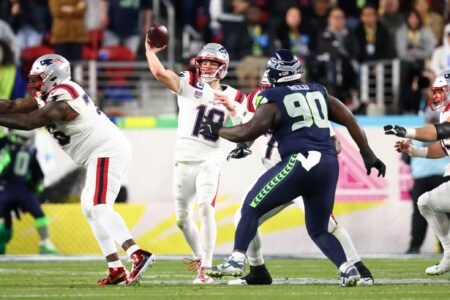
Super Bowl 49, at the University of Phoenix Stadium in Glendale, Arizona
New England Patriots 28, Seattle Seahawks 24
Head Coaches: Bill Belichick, Pete Carroll
Quarterbacks: Tom Brady, Russell Wilson
Odds: even, pick'em
Weather: retractable roof closed
Game MVP: Tom Brady (somewhat surprised it was not Malcolm Butler)
Pats finish the 2014 season with a record of 15-4
Seahawks finish the season with a record of 14-5


I don't know about you, but when Russell Wilson led the Seahawks on their two-minute drive and Jermaine Kearse caught that pass on the sideline down to the five-yard line, I started throwing things and had to leave the room at the party I was at. All I could think was "****, ****, **** - not again! Not another David Tyree game!".

For Seattle, it was just like the Rams in 2001: another team ready to anoint themselves a dynasty comes crashing back to earth.


MVP: Tom Brady
TB12 completed 74% of his passes for 328 yards, four touchdowns, and a 101.1 passer rating.


Super Bowl XLIX Mic'd Up Second Half Highlights


Butler picks off Wilson to seal Patriots Super Bowl XLIX Victory


Super Bowl XLIX - 4th Quarter


Best Fan Reactions to the Interception [NOTE: Audio NSFW]


Patriots win Super Bowl XLIX beat Seattle on Malcolm Butler interception | Boston Herald

'Worst play-call in Super Bowl history' (or was it greatest defensive preparation and execution?) will forever alter perception of Seahawks, Patriots | Washington Post


Who would have ever guessed that Kyle Arrington's inability to defend against Seattle's receivers
would have led to the most memorable play in the history of the Super Bowl?


Best. GIF. Ever.


you can just see/feel his heart shatter into a billion pieces...

lol, schadenfreude is delicious at times
 
The do your job segment on Malcolm... have to watch on youtube


17:00 video with Matt Patricia, Julian Edelman​


At one point in the second half, it looked like Seahawks wide receiver Chris Matthews would go from obscurity to Super Bowl hero.​

Matthews had a big game for the Seahawks, but he’s at least sharing the unlikely hero prize with Patriots cornerback Malcolm Butler. Butler’s interception with seconds to play thwarted the Seahawks as they were a yard away from taking the lead and helped make the Patriots 28-24 winners in Arizona.​

“I just had a vision that I was gonna make a big play and it came true,” Butler said to Michelle Tafoya of NBC Sports just after the final whistle.​

Butler probably didn’t have much company on that vision quest. Butler overcame long odds to make the Patriots as an undrafted free agent who played his college ball at West Alabama and played just 15 snaps in the AFC Championship game victory, leaving him off the radar for plenty of fans heading into Sunday night.​

Thanks to an expert read on Russell Wilson’s intentions, Butler has a much higher profile with the season at its end.​


Whether on YouTube or in their own minds, Patriots fans will replay Malcolm Butler’s famous interception in their minds forever. You know which one. Under 30 seconds left in Super Bowl XLIX, clock ticking, Seahawks down four points but knocking on the door of a go-ahead touchdown.​

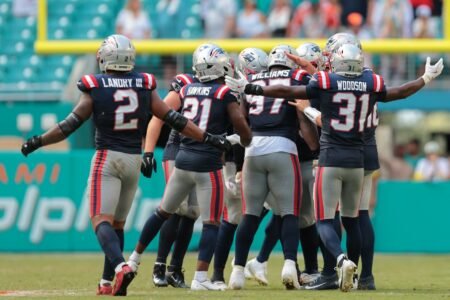
Snap gets off fine, Russell Wilson drops back and lets it rip. It looked like a perfectly designed play for a fleeting moment. But there was Butler to blow it up. No. 21 jumps Ricardo Lockette’s route and snags the football, holding strong like a statue as Lockette pinballs off him. Butler falls forward, his teammates make sure he’s down, and the celebration is on.​

History.​

Three years later, Butler’s interception still stands as arguably the most iconic single play in Super Bowl history. Considering how many historic moments the Patriots have forged in their eight Super Bowl trips with Bill Belichick and Tom Brady, that’s quite a striking accomplishment for a player who was an unknown, undrafted rookie at the time.​

But still, Butler was not a one-play wonder in that game. In fact, his goal line interception was actually the culmination of a stunning defensive performance that helped the Patriots overcome a 10-point deficit in the fourth quarter and, ultimately, save their Super Bowl.​

Despite his interception getting the glory – and justifiably so – Butler impacted Super Bowl XLIX in a meaningful way on several more of his snaps. He recorded three passes defensed and three total tackles, mostly neutralizing Wilson’s attempts to attack him in coverage.​

It’s well-known by now that Butler had a good week of practice for that game, and specifically worked on the play the Seahawks ran that led to his interception. He credited the coaches for their famous “Next Man Up” mentality and having the whole depth chart ready to go as if they’re playing every snap.​


Butler played only 18 snaps on defense in Super Bowl XLIX, taking his first in the third quarter. Matt Patricia had seen enough of Kyle Arrington as the third cornerback. He switched Arrington out for Butler and shifted Brandon Browner’s coverage to Seahawks wideout Chris Matthews, who had come out of nowhere to toast the Patriots secondary to that point. Butler mostly drew Jermaine Kearse.​

He first made his presence felt when he tackled Marshawn Lynch, of all people. After the Patriots had struggled to wrap Beast Mode up for much of the evening, in came the rookie to show the first flash of his strong tackling ability for an undersized cornerback. He held Lynch to just two yards.​


On the next play, Butler wrapped up Kearse for just a six-yard catch. He kept himself in position well to make the play. And on the next play after that, Butler broke up a deep pass intended for Kearse on third-and-3. Butler again stuck with Kearse in his coverage and got enough of his arm in the way to disrupt the catch.​

Had the pass been completed, the Seahawks would have had a first-and-10 at about the Patriots’ 20-yard line with a real chance to add minimum three points to their 24-14 lead at the time. Because of everything that happened afterward, Butler’s pass breakup has been criminally underplayed in the past three years.​


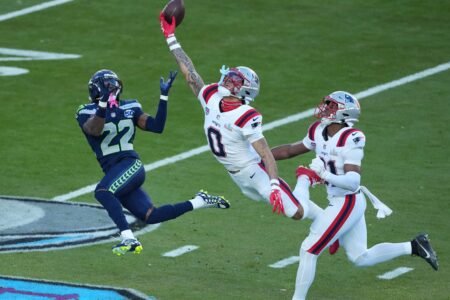
Malcolm Butler breaks up a pass intended for Jermaine Kearse of the Seattle Seahawks in the third quarter of Super Bowl XLIX.


After that stop, the defense really started to come together. A three-and-out followed by a Danny Amendola touchdown had the Seahawks up only three. And on the ensuing Seattle drive, Butler disrupted Lockette on a first-and-10 throw. He came close to committing pass interference at the tail end of the play, but he got just enough jam on Lockette at the line to slow him down.​

After Tom Brady’s second touchdown drive of the fourth quarter, Butler really started to turn heads. But of course, it looked very bad for a time. Thirty-one yards to Marshawn Lynch set them up at midfield, but Butler popped up on the very next play to slow their momentum with another breakup on Kearse. This time, he made a leaping block on what could’ve been a sure catch for 20-plus yards.​


Yet three snaps later, it appeared that the Patriots’ hearts would be ripped out for the third straight Super Bowl. Kearse made what could have gone down as an even more shocking circus catch than David Tyree’s in the fourth quarter of the Giants’ Super Bowl XLII win over the Patriots.​

But the catch wasn’t Butler’s fault. In fact, he made yet another impressive breakup. It simply led to an incredible series of bounces and the ball ended up in Kearse’s hands. The look on Kurt Warner’s face off to the left tells the story:​


Jermaine Kearse of the Seattle Seahawks makes a catch over Malcolm Butler in the fourth quarter of Super Bowl XLIX.


Butler still showed good awareness to stay with Kearse and push him out of bounds on the play to prevent a possible touchdown. And two plays later, you-know-what happened.​
 
There's no doubt that Butler made the greatest defensive play in NYFL history.

It wouldn't have been needed if Harmon knocked the ball away from Kearse, instead of jumping over him, on the pass that set it up.

It never gets old seeing that play or the fan reactions.
 
Greatest Superbowl of all time.

the leagues most current dynasty confronted by the defending Superbowl champs trying to take our place at the throne.

And this one lived up to every bit of its hype as in the final minute after what already had been an amazingly contested game came down to the NFL's greatest play ever.
 
That play changed the trajectory of both franchises. Tom Brady looked absolutely defeated leading up to that play as he was fearing a 3rd straight defensive collapse and their legacy being diminished. The media would've annihilated Bill for not taking a time out and I think Tom and Bill’s relationship would’ve deteriorated had they lost that game. Tom would’ve left fairly soon after that.

Seahawks would’ve been the first team since the 2003-2004 Pats to repeat. Players said things were never the same after that play.
 
That play changed the trajectory of both franchises. Tom Brady looked absolutely defeated leading up to that play as he was fearing a 3rd straight defensive collapse and their legacy being diminished. The media would've annihilated Bill for not taking a time out and I think Tom and Bill’s relationship would’ve deteriorated had they lost that game. Tom would’ve left fairly soon after that.

Seahawks would’ve been the first team since the 2003-2004 Pats to repeat. Players said things were never the same after that play.
MattyP’s description of that moment gives great insight into why Pats did not want to call time out. And gives insight into why Seattle did not run Lynch. Clip starts at his explanation, really great…

 
Today In Patriots History
Pats beat Carolina in Super Bowl 38 thriller
Win second championship, proving 2001 was not a fluke
Adam Vinatieri with another last minute game-winning FG


Sunday February 1, 2004 at 6:25
Super Bowl 38, at Reliant Stadium in Houston
New England Patriots 32, Carolina Panthers 29
Head Coaches: Bill Belichick, John Fox
Quarterbacks: Tom Brady, Jake Delhomme
Odds: Patriots favored by 7
Weather: retractable roof closed
Game MVP: Tom Brady
Pats finish the 2003 season with a record of 17-2
Panthers finish the season with a record of 14-6


While casual fans remember this Patriots-Panthers game for Janet Jackson's halftime "wardrobe malfunction", the game itself was a wild affair that saw the two teams combine for 37 points in the fourth quarter alone. Incredibly all that came after the lowest scoring drought in super bowl history (26:55) to open the game. Adam Vinatieri sealed a second Super Bowl title for New England by nailing the go-ahead field goal with just four seconds left to play to lift the Patriots to a 32-29 victory.


Plays from Scrimmage:
Patriots 83, Panthers 49

3rd and 4th Down:
Patriots 9-18, Panthers 4-12

First Half:
Points scored in first 27 minutes: zero
Points scored in final 3 minutes: 24

Second Half:
Points scored in third quarter: zero
Points scored in fourth quarter: 37

Two-Point Attempts
Panthers: 0-2
Patriots: 1-1
(3-point differential versus kicking a PAT)

Field Goal Attempts:
Adam Vinatieri 1-3, John Kasay 1-1
(The only one people remember is AV's third attempt)


If you are interested and have a few minutes to spare, there is an excellent, extremly detailed account of the entire game here:
Today in Pro Football History - 2004: Patriots Edge Panthers in Super Bowl XXXVIII


For the No. 4 game on 98.5 The Sports Hub’s Belichick 20/20 countdown, we go back to one of the Patriots’ six Super Bowl wins. And this team has played in so many big games that their thrilling 32-29 win over the Carolina Panthers in Super Bowl XXXVIII kind of gets lost in the shuffle.​

But this was a great game, certainly one of the more heroic performances of Tom Brady’s career and one of Adam Vinatieri’s signature games. Brady earned MVP honors after going 32-for-48 through the air for 354 yards, three touchdowns, and one interception.​

The team’s back-and-forth shootout in the second half turned this one into a thriller, and Brady certainly deserved credit for his performance. But Belichick’s stamp on this game came on special teams.​

Vinatieri missed a couple of field goal attempts early in the game, but nailed his 41-yarder with mere seconds left in regulation so he more than made up for those misses. His big kick came after another clutch drive engineered by Brady to get the Patriots in position – and a major miscue in the kicking game by the Panthers.​

Many Pats fans remember this night for Carolina kicker John Kasay kicking the ball out of bounds on their final kickoff of the game with the score tied 29-29. That resulted in a penalty and the Patriots getting set up at the 40-yard line. So it wasn’t exactly the longest, hardest drive of Brady’s career. But considering the circumstances, and the Patriots’ ability to execute perfectly in a season-on-the-line situation while the Panthers faltered, Belichick deserves credit of his own for having his team ready to play their best football in those final minutes – as opposed to John Fox’s Panthers.​


Full game recap from the Patriots website:
Super Bowl XXXVIII -- New England 32, Carolina 29
Adam Vinatieri's 41-yard field goal with four seconds to play lifted New England to its second championship in three years. While it took a Super Bowl-record 26 minutes, 55 seconds for the first points to be scored, the teams eventually combined for 868 total yards (481 by the Patriots). Carolina briefly moved in front on an 85-yard Muhsin Muhammad TD reception and later tied the game on Ricky Proehl's 12-yard scoring catch with 1:08 to play. But Tom Brady calmly drove the Patriots into field goal range, aided by Deion Branch's clutch 17-yard grab.


4:58 audio below, with classic radio calls by the late Gil Santos and some of Bill Belichick’s animated postgame comments:


A write-up of the game from abroad:
If Vinatieri stole the headlines, it was Patriots quarterback Tom Brady who laid the foundations for victory, winning the MVP award - just as he did after the 2002 win over the Rams. Brady completed 32 of 48 passes for 354 yards and three touchdowns against a ferocious Panthers defense.​

Having spent the entire two-week build-up to the game being compared to the brilliant Joe Montana of the San Francisco 49ers, Brady lived up to his billing and is now a perfect 6-0 in post-season games.​

It was the 15th straight victory for the Patriots, only two behind the NFL record, set by Miami Dolphins in 1972.​


The first Super Bowl held inside a stadium with a retractable roof was one of wild contrasts.​

The opening half featured the punishing hitting and the aggressive defensive play that has become the hallmark of both teams as they combined to set a Super Bowl record for the longest scoreless start to a title game.​

But by the fourth quarter the contest had turned into an offensive shootout as the two teams combined to score 37 points and establish several Super Bowl records.​

Leading 14-10 entering the final quarter, the Patriots appeared to seize control when Antowain Smith scampered two yards to put New England in front 21-10.​


But the plucky Panthers refused to quit, and quarterback Jake Delhomme replied immediately with an 81-yard scoring drive, DeShaun Foster racing the final 33 yards for the touchdown.​

Carolina decided to go for a two-point conversion to move within a field goal of the Patriots but failed.​

The Panthers, however, did not trail for long, Delhomme finding Mushin Muhammad streaking down the sidelines and hitting him with a spectacular 85-yard touchdown strike. The play was the longest from scrimmage in Super Bowl history.​

Again, the Panthers went for the two-point conversion and again failed but they still took the lead for the first time 22-21.​

Brady hit back by marching his team 68 yards. He found linebacker Mike Vrabel with a one-yard touchdown pass followed by a successful two-point conversion plunge from running back Kevin Faulk as the Pats went in front 29-22.​

The seesaw battle continued with the Panthers scoring again on their next possession, Delhomme and Rickey Proehl hooking up on a touchdown pass to tie the game. Then came the dramatic finale.​


Bonus Breakdown: Josh McDaniels On Tom Brady's Comeback In Super Bowl XXXVIII | Patriots
3:32 Patriots Video


Panthers vs. Patriots Super Bowl 38 | NFL Vault Highlights
13:43 Highlight Video


Super Bowl 38 - Patriots vs Panthers
2:11:30 Full Game


Team StatsPanthersPatriots
First Downs1729
Rush-Yds-TDs16-92-135-127-1
Cmp-Att-Yd-TD-INT16-33-323-3-032-48-354-3-1
Sacked-Yards4-280-0
Net Pass Yards295354
Total Yards387481
Fumbles-Lost1-11-0
Turnovers11
Penalties-Yards12-738-60
Third Down Conv.4-128-17
Fourth Down Conv.0-01-1
Time of Possession21:0238:58


One thing that is overlooked about Malcolm Butler's play is the amount of ground that he had to cover in an exceptionally short amount of time. Lockette was open but Wilson was just a split second late getting the ball to him.


MattyP’s description of that moment gives great insight into why Pats did not want to call time out. And gives insight into why Seattle did not run Lynch. Clip starts at his explanation, really great…


This was still a massive risk on Bill's legacy as a 3rd straight defensive collapse on the final drive of a Super Bowl would've really hurt him. Butler had been beat all week on that play and he was only put in because Arrington was so bad that night.

Seahawks players were pissed they didn't try to run with Lynch and have speculated that Carroll and the organization wanted Wilson to be the hero. That decision really divided the locker room.
One thing that is overlooked about Malcolm Butler's play is the amount of ground that he had to cover in an exceptionally short amount of time. Lockette was open but Wilson was just a split second late getting the ball to him.


That's when I turned my back on the play as it looked like it was going to be a TD.

I don't think both Lockette and Wilson realized that Butler had a chance on the play.
 

Bill’s description of those coaching points, plus MattP’s recounting, make it clear that this may be the greatest example ever of coaches putting players in position to make plays. Not just Butler, also Browner.

Add in all the context to set it up. Stopping Lynch on third and two earlier. Bill reading Pete and not calling timeout. Matt calling a defense they had never ever used, had just put in, and then tweaked with changes after their last practice.

Arguably the single greatest defensive play in NFL history, ever. Certainly in that conversation.
 
Today in Patriots History
Rob Ninkovich


Happy 41st birthday to Rob Ninkovich
Born Feb 1, 1984; from New Lenox, Illinois
Patriot Edge, 2009-2016; uniform #50
Signed as a veteran free agent on August 2, 2009
Pats résumé: 8 seasons, 123 games (101 starts); 454 tackles, 46 sacks, 21 passes defensed, 14 fumble recoveries 88 QB hits, 55 TFL


After spending parts of three non-descript seasons with New Orleans and Miami in which he played in a total of eight games, the Pats signed Nink as a free agent just after the start of the 2009 training camp. Rob blew away any minimal expecatations of that time, becoming a main fixture on the Patriots defense as part of two super bowl winners.

Ninkovich also performed a vital part in 17 playoff games. The Pats went 11-6 in those contests, and he earned two Super Bowl rings for the victories over Seattle and Atlanta. In the postseason Nink had 66 tackles (36 solo), nine tackles for a loss, eight pass deflections, six sacks, a forced fumble, a fumble recovery, an interception and a touchdown

What does not show up in the stat sheet is how well he did his job of setting the edge and taking away an outside option from opposing offenses.


Do. Your. Job. — The Ninkovich Sack No One Will Remember | Inside The Pylon
Ninkovich, aligned pre-snap in a three-point stance on the outside shoulder of the right tackle, immediately drops back behind his fellow linemen at the snap, mirroring the movements of Wilson in the pocket. Lined up over the right guard, Chris Jones slants toward the B-gap, drawing two blockers. Meanwhile, Chandler Jones positioned pre-snap between the left tackle and guard slants into the A-gap, also occupying two blockers.​

Taking the cue from Chandler Jones’s rush toward the center, Ninkovich loops around his teammate. Ayers delivers a chip on Lynch at the snap and pushes into the backfield against the left tackle, causing the nearby left guard to shuffle over and help on the block. This seemingly unrelated combination of movements creates an opening for Ninkovich to burst upfield unimpeded and take down the QB for a sack.​

After the ensuing punt, New England quarterback Tom Brady and his offense would go on to score a touchdown to cut the deficit to 24-21. The Patriots defense would follow-up by forcing another quick three-and-out, allowing Brady and company to once again drive downfield for what would end up being a game-winning touchdown. And only then did Malcolm Butler step up when the defense needed it most.​


2. Ninkovich thought the Patriots would draft him in 2006. They scouted him, but the Saints had pick 135 to the Patriots’ 136, and picked up Ninkovich at that spot. “When I was coming out for the draft, I thought I was coming to the Patriots,’’ Ninkovich said. “That’s what I thought. Pick 135. 136 was you guys, 136 was the Saints. I thought the phone ringing was New England, but it was New Orleans. That was the path that I had to go to to meet my beautiful wife and now I have two beautiful children and I’m grateful for that. That’s a part of my life that really was a true blessing for me to learn those life lessons.’’​


“My relationship with Rob dates all the way back to Purdue when we scouted him coming out in the ’06 draft, right? He was a little bit of a ‘Was he a linebacker? Was he a defensive end?’ Well it turned out he was both and we missed him the first time around but we finally got it right. He’s Croatian so I knew he was tough. There was never any doubt about that. All Croatians are tough.​

“But after New Orleans, Miami, back to New Orleans, we’re sitting there in training camp in 2009 lacking a little depth at the outside linebacker position. Nick (Caserio) said ‘There’s a guy, Rob, he should be on a roster, he should be in a camp and he’s available so let’s get him.’ Really, it’s just history after that. Rob came in and did a great job for us in the kicking game, started playing on defense the following year in 2010, was a regular player for us. (He) had the big game Monday night against Miami — two interceptions, fumble, made a very athletic play, made a great interception and we saw his coverage skill. It kind of just went on from there. Just year after year of production — sacks, forced fumbles, recovered fumbles. (He had) 24 forced and recovered fumbles in his career, the five interceptions – two against Miami, two against the Jets — then, of course, the Denver play where he got (Peyton) Manning on a crossing pattern, the strip sack against (Mark) Sanchez in overtime against the Jets. I mean we just go on and on and on. I mean there are so many big plays he made through the course of his career.​


“But Rob is one of the most unselfish players I’ve ever coached. Like a lot of guys, he came in here very unheralded; (Tom) Brady, Malcolm Butler, guys like that and the guy he replaced, No. 50 Mike Vrabel. (He) didn’t come in with a lot of fanfare but just came in and worked hard and became a very, very versatile player for us. He played defensive end, inside linebacker, outside linebacker, all the kicking game, was our backup snapper. As a head coach or as a special teams coach, Scott (O’Brien) and Joe (Judge) will tell you that, things like that, just knowing you have a good backup long snapper really lets you sleep at night. Those are the kind of things that if it comes up in a game it’s critical. It might never come up but if it does — but that’s the kind of security that Rob gave us on everything, all the different positions defensively and in the kicking game. His versatility was really exceptional which is a tribute to his intelligence, his preparation and his overall skill set. Rob’s got very good playing strength. Maybe he got some of that when he was tossing those steel beams around in Chicago with his dad. But (he) worked very hard in the weight room, had very good playing strength, ran well, athletic and, like I said, all day tough and versatile. (He was a) team captain, one of the real leaders of the team. You can see the testament of everybody here what Rob means to all of us and what he’s meant to all of us.​


“Personally, (I) just can’t thank you enough for your contributions to the team (and) to the organization. I haven’t had a — never coached a more unselfish player and I’ve coached a lot of them but you go right up in there in that top echelon group. It was always about the team. It was always about how Rob could help somebody else. ‘What do you need me to do, coach? Do you need me to play here, play there, do something else? I can do this. I’ll snap, I’ll cover kicks, I’ll play linebacker, I’ll rush, I’ll cover. Whatever you need me to do.’ That was really very important to us in the last three years really starting with kind of that Denver game in ’14 where we became much more of a — we put a lot of flexibility into our defense with the linebackers rushing more and our defensive ends dropping more and Rob was really a huge, huge part of that transition.​


“So with a great deal of personal gratitude I thank you (and) Paige for your great support, performance, loyalty, dedication to this organization (and) our football team. You’ve had a tremendous career. You’ve earned every single thing that you’ve gotten. Nobody gave you anything; nobody had worked harder for it. As a coach I’m extremely proud of what you’ve accomplished and you earned every single thing — all those sacks, all those forced fumbles, all those tackles, all those big plays. You got there with hard work and perseverance, dedication, preparation. All the things that we preach for our program, Rob epitomizes.​

“Congratulations on a tremendous career. It’s been an honor to coach you. Thank you for your contributions to the Patriots and to me personally. Thank you.”​


His final game was the epic 2017 Super Bowl, which the Patriots won 34-28 in overtime. New England trailed the Atlanta Falcons 28-3 in the third quarter. It’s the largest comeback in Super Bowl history.​

Ninkovich said it was an “amazing game. The way the Patriots prepare and practice, there was just no panic. You could feel the momentum switch. Then it was Tom (Brady) making big play after big play. It was surreal.”​

Ninkovich walked away after the win because he could still walk.​

“Sometimes, I get the itch,” he said. “How many people can say that their last game was an NFL championship? The walk-off was a home run.”​


Patriots.com: Photo Gallery - Best of Rob Ninkovich

Patriots.com: Video - Rob Ninkovich career highlights


Best of Rob Ninkovich | Career Highlights | 2009-2016
4:18 Highlight Video
 
Today in Patriots History
The 1972 Draft


After two super bowl championships and the birth date of Rob Ninkovich, these other Patriots February 1 events are a bit underwhelming.


February 1, 2020:
Stephon Gilmore is named 2019 NFL Defensive Player of the Year.

Stephon Gilmore named Associated Press 2019 NFL Defensive Player of the Year - Patriots.com media release
Stephon Gilmore becomes the first New England Patriot to win DPOY, an accolade that has been awarded at the end of every season since 1971.​

Gilmore tied for the NFL lead with a career-high six interceptions, two of which he returned for touchdowns (Week 2 at Miami & Week 15 at Cincinnati) for a defense that finished No. 1 in the NFL in total defense (275.9 yards per game) and points allowed per game (14.1). He also tied for the NFL lead with 20 passes defensed, matching his single-season high from 2018. Gilmore joined Ty Law (27 in 1998 & 23 in 2003) as the only New England Patriots with multiple seasons of 20-plus passes defensed in franchise history. Gilmore also posted a career-high 53 tackles and recovered one fumble.​


Gilmore locks down 2019 NFL DPOY - commentary by Mike Dussault, Patriots.com

Stephon Gilmore wins NFL’s 2019 Defensive Player of the Year award - commentary by Mark Daniels


February 1, 2024:
The New England Patriots announced today three new additions to Jerod Mayo's staff. DeMarcus Covington has been promoted to defensive coordinator, Jeremy Springer will serve as special teams coordinator and Alex Van Pelt will serve as offensive coordinator.​


February 1, 2020:
DeMarcus Covington becomes the new defensive line coach.
He replaces Bret Bielema, who followed Joe Judge to work on the new Giants' head coach's staff.


February 1, 2019:
The Patriots promote DeMarcus Covington to outside linebackers coach.


February 1, 2017:
DeMarcus Covington joins the Patriots as a coaching assistant.
This was his first job in the pros, after holding various college assistant coaching positions from 2012-2016.


February 1, 2016:
Brian Flores is promoted to linebackers coach. He began his coaching career in 2008 as a special teams assistant, and had most recently been the Pats safeties coach from 2012-2015.


February 1, 2005:
Pats sign free agent S Ike Charlton, who had played in 53 games for the Seahawks, Jaguars and Giants.


February 1, 2002:
Nick Caserio is re-assigned to be 'offensive coaching assistant', after having served as a 'personnel assistant' in 2001. He joined the Patriots in '01 after having previously worked as a grad assistant at Saginaw Valley State and Central Michigan.


February 1, 2001:
Romeo Crennel is hired as defensive coordinator.
He and Bill Belichick worked together for the Giants from 1981-90, with the Pats in '96 and with the Jets from 1997-99.

In addition, free agent FB Larry Bowie is signed to a contract. He had previously played in 25 games for Washington.


February 1, 2000:
New head coach Bill Belichick begins assembling his staff.
Charlie Weis is hired to be the offensive coordinator, and Eric Mangini will be a defensive assistant coach.
Two other coaches are re-signed: Ivan Fears as wide receivers coach, and Jeff Davidson as assistant offensive line coach.


February 1, 1999
Jim Murphy is released.
The Reading Mass native and Northeastern grad was a quarterback who spent two years in the Pats organization, but never got on the field for an NFL snap. Murphy was allocated to Barcelona in NFL Europe in 1998, and was head coach at Merrimack College from 2003 to 2007.


February 1, 1997:
Pete Carroll hires Carl Smith to be an assistant head coach/QB coach.


February 1, 1994:
Maurice Carthon is hired as an assistant coach.


February 1, 1989:
Ernest Gibson, Teddy Garcia and Tom Benson become unconditional free agents.


February 1, 1986
John Hannah retires six days after the Pats SB20 loss to Chicago.


February 1, 1981:
Sam Adams, Ray Costict, Ray Hamilton, Don Hasselbeck, Horace Ivory, Steve King, Steve Owen and Rod Shoate become free agents.


February 1, 1972:
Day One of the 1972 NFL Draft is held at the Essex House in New York, consisting of rounds one through seven.
Buffalo selects Notre Dame defensive end Walt Patulski with the first pick.


As for what transpired with New England's draft picks, be warned - this ride has many strange twists and turns.

The Patriots had no first round draft pick thanks to trades involving a few bizarre chapters of early franchise history. In 1970 the Patriots signed QB Joe Kapp as a free agent. Free agency then was not what it is now, with the signing team having to compensate the team that lost a player. In this case the Pats sent Minnesota their 1972 first round pick (which turned out to be 10th overall), plus safety John Charles and cash. Not a good value at all, as Kapp lasted one 1-9 season while throwing 17 interceptions versus three touchdowns!

Similarly the Pats received compensation when due to a front office oversight DT Phil Olsen (the team's fourth overall pick from the 1970 draft) signed with the Rams. The Patriots received LA's 1972 first round pick and more - then traded that pick to the Giants for a player that refused to report to the Pats, Fred Dryer.

New England also traded away their second round pick in the deal that brought RB Duane Thomas to Foxboro for a few strange days in 1971. The Pats were finally able to draft a player near the end of the second round, WR Tom Reynolds; he lasted just one season for the Pats, with eight receptions and two touchdowns.

The Pats original third round pick was also lost in the Duane Thomas trade, but the club did have another third from Los Angeles via the Phil Olsen signing. New England used that selection on Colorado State defensive end Jim White; he too lasted only one year with the Patriots.

New England had traded their own fourth round pick the previous year to Dallas for LB Steve Kiner, and their fifth to Baltimore for PR Ron Gardin. The former was a hit, the latter a miss.

The Pats had also picked up another fifth from Oakland in '71, and used it on Ron Bolton; he would start at corner for the Pats through 1975.

The Patriots own sixth round pick went to the Giants as part of the Fred Dryer trade, and then they used their seventh on a tight end named Clark Hoss who was traded to Cleveland at the start of training camp. The Pats had the very next pick via a trade with the Chargers for Eddie Ray. (The running back never did anything while with the Patriots but then he proceeded to play for six more years in the NFL.) The Pats used that draft pick on RB John Tarver, primarily a blocking back who scored eight touchdowns over the next three seasons for the Patriots.

Tarver is most well known for one incredibly forgettable play.

In a 1974 game at Oakland, John Tarver threw the ball behind him so that the bad men on the other team would leave him alone. It was the type of play one would see on front lawns back in the day, playing tackle football against older, bigger fellow elementary school students. He panicked and threw the ball over his head backwards into the end zone! You had to see it to believe it.


February 1, 1971:
DL Karl Henke is traded to San Diego for G Jim Schmedding
Schmedding had been a backup for the Chargers from 1968-70, but did not make the Pats roster.


February 1, 1970:
The AFL and NFL announce a merger, forming a combined league with 26 teams. Thirteen will compete in the American Football Conference and 13 in the National Football Conference.

The Patriots would play in the AFC East, which was similar to their AFL East. The AFL's Houston Oilers would no longer be in the East, but the Patriots, Bills, Jets and Dolphins would remain in the same division. Three teams from the NFL would move to the new AFC - including the Baltimore Colts, who would also play in the AFC East.


Happy 36th birthday to Travaris Cadet
Born Feb 1, 1989 in Miami
Patriot RB, 2015; uniform #39
Signed as a free agent on March 17, 2015
Pats résumé: one game


Many Pats fans had high hopes for the former New Orleans Saint from Appalachian State, but he was waived on Sept 29, 2015. Cadet played in 73 NFL games from 2012-2018, with seven touchdowns.


In memory of Alvin Richardson, who would have been 90 today
Born Feb 1, 1935 in New Orleans
Patriot DE, 1960; uniform #79

A 26th round draft pick by the Eagles in 1957, the Grambling State alum played in three games with two starts for the Patriots in their inaugural 1960 season.


Other pro football players born on this date with a New England connection:

Amara Darboh, 31 (1994)
A Patriot WR for all of four days in 2018; he was a third round pick by Seattle in 2017.

Tim Mazzetti, 69 (1956)
Born and raised in Old Greenwich CT
Penn kicker played for the Falcons for three seasons. He also scored the first points in USFL history for the Boston Breakers, where he was an All-USFL kicker.

Larry Swider, 70 (1955)
Born and raised in Limestone, Maine
Punter from 1977-82 was a Broncos draft pick from Pitt.

Dave Graham, 86 (1939)
Born in Bridgeport, raised in Fairfield CT
Left tackle played in 83 games for the Eagles in the sixties. Graham later became a grade school principal and then his town's executive director of school administration in 2017.

Roger Ellis (1938-2008)
Native of Westwood, Massachusetts; University of Maine
After being drafted by the Giants in 1959 the middle linebacker would play for the Titans/Jets for four seasons in the AFL. He later became a secret service agent for Spiro Agnew.

Johnny Miller (1934-2015)
Born and raised in Lowell; Keith Academy; Boston College
OT and DT for Washington and Green Bay, 1955-60. He was an All-American and enshrined to the BC Hall of Fame and later the Hall of Fame at St. Mary’s High School in Lynn where he had coached football.

Lou Koplow (1904-1988)
Born in Malden; Boston English High School; Boston University
Had a cup of coffee as a tackle for the Providence Steam Roller in the twenties.

 
Status
Not open for further replies.
MORSE: Patriots Mock Draft 6 – A Week Before the Draft
TRANSCRIPT: Eliot Wolf Pre-Draft Press Conference 4/13
Patriots News 04-12, What To Watch For In The NFL Draft
MORSE: Pre-Draft Patriots News and Notes
MORSE: Patriots Mock Draft 5
Mark Morse
1 week ago
Patriots Part Ways with Another Linebacker as Offseason Roster Shake-Up Continues
Patriots News 04-05, Mock Draft 2.0, Patriots Look For OL Depth
MORSE: 18 Game Schedule and Other Patriots Notes
TRANSCRIPT: Mike Vrabel Press Conference at the League Meetings 3/31
MORSE: Smokescreens and Misinformation Leading Up to Patriots Draft
Back
Top