



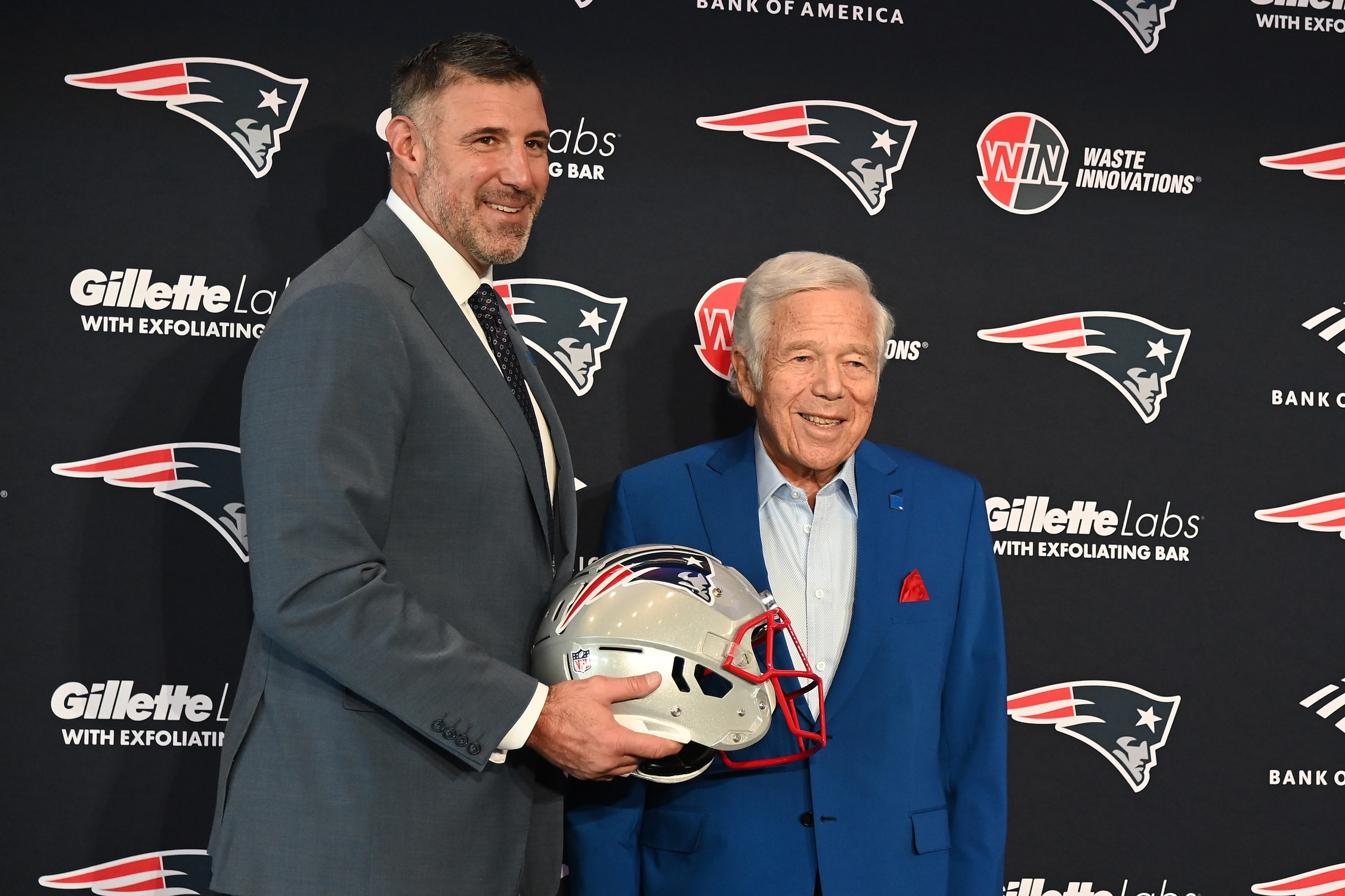
Here’s what new head coach Mike Vrabel had to say in his first press conference with the New England Patriots on Monday.
OPENING STATEMENT (Robert Kraft)
“Well, welcome. We were gathered here 15 months ago at the Sports Illustrated Pavilion to welcome Mike as a new inductee into the Patriots Hall of Fame. I’m really proud that 15 months later, we’re back here today to invite him and his lovely wife, Jen, to announce as the new head coach of the New England Patriots. I’d like to ask Jen if she’d come up here for a moment. This is from our entire fan base here to tell you how excited we are about you both being here.”
“Mike’s history with the NFL, his experience, is what embodies what’s great about the NFL. He joined us in 2001 as an unheralded free agent. He had never started a game. He had been in the league four years, and he joined us, and he became a starter those next four years and we were privileged to win three Super Bowl in that time. His impact, because of his work ethic and his competitive drive and his leadership skills, made it very special, those four years. Those personal characteristics also made him a very high-performing coach, which he had started to do seven years ago, after being a linebacker coach at Ohio State for a year, he became a new coach at the Tennessee Titans for six years and finished with a record a winning record.”
“I might remind everyone in this room in 2019, he beat us right here in the playoffs. It was Tommy’s [Tom Brady’s] last game as a Patriot. And then he went on to Baltimore and beat the Ravens there who were the number one seed. And then in 2021, he finished with the best record in the AFC 12-5, and it was the number one team. In the interview process, Mike showed us that he had a very deep understanding of our current team, and most importantly, he had a clear and focused strategy of how to get us back to a championship way that is so important to all of us, but also something that I think our fan base really deserves and expects.”
“With that being said, it’s my great honor to introduce you all to the next head coach of the New England Patriots, Mike Vrabel.”
OPENING STATEMENT (Mike Vrabel):
“You guys could put your cameras down and clap a little bit. Some of you familiar faces that I remember from back in the day, but that’s okay. Thank you, Robert. I’m humbled. I’m grateful. There’s a lot of people that have helped me get to this point, and I want to thank them. I want to use this opportunity to thank them in front of you. You’ll get to know some of them, most of them. I want to thank my family. I want to thank Jen, who’s been along for this ride for quite a while. Tyler and Carter, who grew up here, who spent time here. It probably wasn’t the easiest thing to be my son as I was trying to figure this out and figure out the difference between being a dad and being a coach. I love them dearly. You’ll see them around, hopefully. Obviously, I want to thank my parents I thank Chuck and Elaine. As I go through this interview process, I’m always quick to tell people that I’m an only child, and only children are spoiled, which I was. I was an only child of two educators. But my dad was a basketball coach and assistant football coach, and he taught me what it was to be tough, to work hard, and to embrace being part of a team, and loving being part of a team, and how powerful that can be.”
“When you’re an only child, those are probably hard things to understand. But I would tell you that those are things that I’ve built on, that I believe in, that I want to try to put as many people in this building and around our players that are like that. So I thank them. Obviously, I want to thank Robert and Jonathan and Daniel and the entire Kraft family. Not only for the time that I spent here as a player, but the experience a year and a half ago that Robert mentioned with the Hall of Fame, just the class that they showed myself, my family, my friends, the people that came. I think one of the biggest groups I’d like to thank are the players that have impacted me along the way from Ohio State, that when I didn’t know what I was doing, I had no idea. I just tried to figure it out as I went along. To the ones that I had in Houston, to the ones in Tennessee. Robert mentioned that we won 12 games in 2001. We played 91 players, and they all cared about the team immensely. They would do whatever it took for the team to win.”
“And with that, the coaches that have impacted me along the way, my high school football coach, Jerry Reardon. I think I’ve had a great opportunity to play for, to coach with, and coach for some unbelievable mentors, people that have helped shape me, from John Cooper, Bill Cowher, John Mitchell, Romeo Crennell, Bill Belichick, the multiple coaches that were here, to Luke Fickle, to Urban Meyer, to Bill O’Brien, who held up his end of the bargain. When he asked me to come to the Houston Texans with him, he said, ‘I’m going to do everything I can to get you ready to be a head coach.’ He did that, and he’s a great friend, I’m going to support Billy every way I can up the road at Chestnut Hill.
“The assistant coaches that have held me accountable to leading the team, sometimes when you’re not right or you need somebody to say, ‘Hey, there’s another way,’ and I want to thank those coaches because to be in this situation, you need so many people around you and you put in place to help the players. I want to thank the teams that were willing to meet with me through this process to give me an opportunity to potentially lead their team. But in the end, it was clear to me and to my family and my soul that this was the place that I wanted to be. I thank Robert, and I thank the Kraft family.”
“Excited to get to work, excited to meet the people in this building that that have made this place special, find out what they need, find out how I can help them, how I can help them do their job better, how we can enhance the stuff that we do well, and then find out what the areas of focus are and get to work. I want to galvanize our football team. I want to galvanize this building. I want to galvanize our fans. The most important thing are the players. There’s some of them right here. I want to provide a program that provides their ownership, but also their accountability of each other, and one that they’ll be proud to be a part of and that they’re going to fight for. You guys are going to ask me questions about culture, which I’ll be happy to talk about and discuss. One thing I’ve realized about culture is that you can find out what your culture looks like when your family, your business, or your team is at its low point.”
“It’s not when you’re winning Super Bowls, or it’s not when you’re 7-1 or 10-1 because then everybody’s waving towels and everybody’s happy and they’re excited to come to work. But when you get hit in the mouth, or you’re down, or the chips are against you, then you can take a snapshot of what your company or your team looks like, and then you’ll find out what culture you have. But that culture is going to be built on winning, a competitive spirit throughout our roster, throughout our players, and throughout our coaches and our staff, and the ability to put the team first and care about somebody other than yourself. I’m excited to do that. I’m excited to get to work. But everyone in this building is going to understand and believe that their job is critically important for our success. And it’s going to be, ‘How can I help you in order to help the players?’ Our players will respect and they will appreciate, and they will be grateful for the opportunity that they have here and the people that work in this building, some very familiar faces that I can’t wait to reconnect and to work and figure out how we help these players and this football team.”
“We’re going to earn the right to be here every day. We’re going to remove entitlement from our football team. We’re going to get everything that we’ve earned from the head coach to the position coaches, all the way down to the players. We’re going to earn the right to be here every single day. I always say that I don’t want to get into too many messages that will be geared for the players, but I hold those conversations. Those are special conversations between the coaches and the players, but we want to treat every player the same way they treat the team, and we want to treat every employee the same way that they treat the team. If they care about the team and they come here with a great attitude and a willingness to work and help the team, I’ve asked Robert to do everything that we can for them, to support them and their families. That’s the type of environment that I want to build, and I’m excited about it. With that, I would love to answer any questions that you have.”
On the fact he said this was a special place as a coach and how would he describe what players he wants to wear a Patriot uniform to help them win as an organization?
“Eliot’s going to laugh. I’m going to say good ones. That’s just an inside joke between him and I already just over the weekend and through the interview process. But we’re going to ask our players to just do a few things. One is to put the team first, to know what to do, and play fast and aggressive. That’s the vision for the type of player. Winners come in all shapes and sizes. We’re going to have leaders. Leaders are going to identify themselves. I know that our staff and our ability to create winners and competitors are probably easier than it is to create leaders. The leaders are going to identify themselves. The leaders are going to be the ones that define the culture. The culture will be what drives and gives you the results that we’re all after. The type of player, when you get into scouting and evaluation, every team has a height, weight, speed. Then it’s our job to take analytical data and watch the tape, and just figure out where they fit best for us. Maybe they’re the best ones and the right ones. That would be wonderful. But it’s a long process, and those are the things we’re going to ask the players to do, is put the team first know what to do and play fast and aggressive and play with some speed.”
On if he has roster control and control over the draft with the Patriots:
“I think the most important thing is that there’s a shared organizational vision for what we want to do and how we want to work and how we want to acquire players. There’s numerous ways to acquire players, through free agency, trade, draft, post-draft process, after training camp. So again, I’m just excited to get to sit down with Eliot and his staff. I’ve met more with Eliot over the weekend than I have … had conversations with him, but I need to sit down with his staff and figure out where we’re at, what we need to do.”
“I’m confident that those types of decisions are all going to sort themselves out. We don’t want to always be on the same page. That’s not the environment that we want to create, but we want to have a shared vision, and there’s also different ways to get there. And I’m embracing that everybody is going to have a different personality. I don’t want my staff to be like me. I don’t want all our players to be similar. We’re going to have diverse ideas, and that’s critical. To be able to have those types of conversations is something that I’m looking forward to.”
On his plans for his offensive and defensive coordinator and if it’s solidified yet:
“No, that’s far from solidified. We want to put the best, talented coaches in front of our players. When they stand in front of these players, I want the players to embrace what every coach is teaching. And I will tell you this, as long as I’m the head coach here, our coaches will have three simple jobs. They sound simple, and they’re probably not as simple as we want to make them be, but they want to teach, they want to develop, and they want to inspire our players by making a connection.”
“We’re going to make strong connections with our players so that we can coach them, and we can push them. I’ve really believed in this system, and I believe in having great teachers, great developers, and also coaches that will inspire our men by making a connection so that they know exactly what makes them tick. We all have stuff outside of here. Every single coach, every single player, every single person in our building is going to have something outside of football with their family, mentally, physically, They’re all going to deal with something. It’s going to look different, and it’s going to smell different, but it’s something. We got to deal with it. When they come in the building, do everything that we can to help them do their jobs.”
“I do feel the shared experiences that I’ve had as a player, one that, as Robert mentioned, didn’t start a game for four years and made the roster because of special teams and occasionally playing on third down and backing up and being a backup at more than one position to a free agent that took an opportunity to come here and started for the next 10 years of his career to being a veteran player who was expected to produce at a high level to one that, as he got older was traded to another team that then had to start over, to had to act as a coach. So, I feel like that every player that sits in that meeting room, I can, at some point in my career, relate to and have a conversation about.”
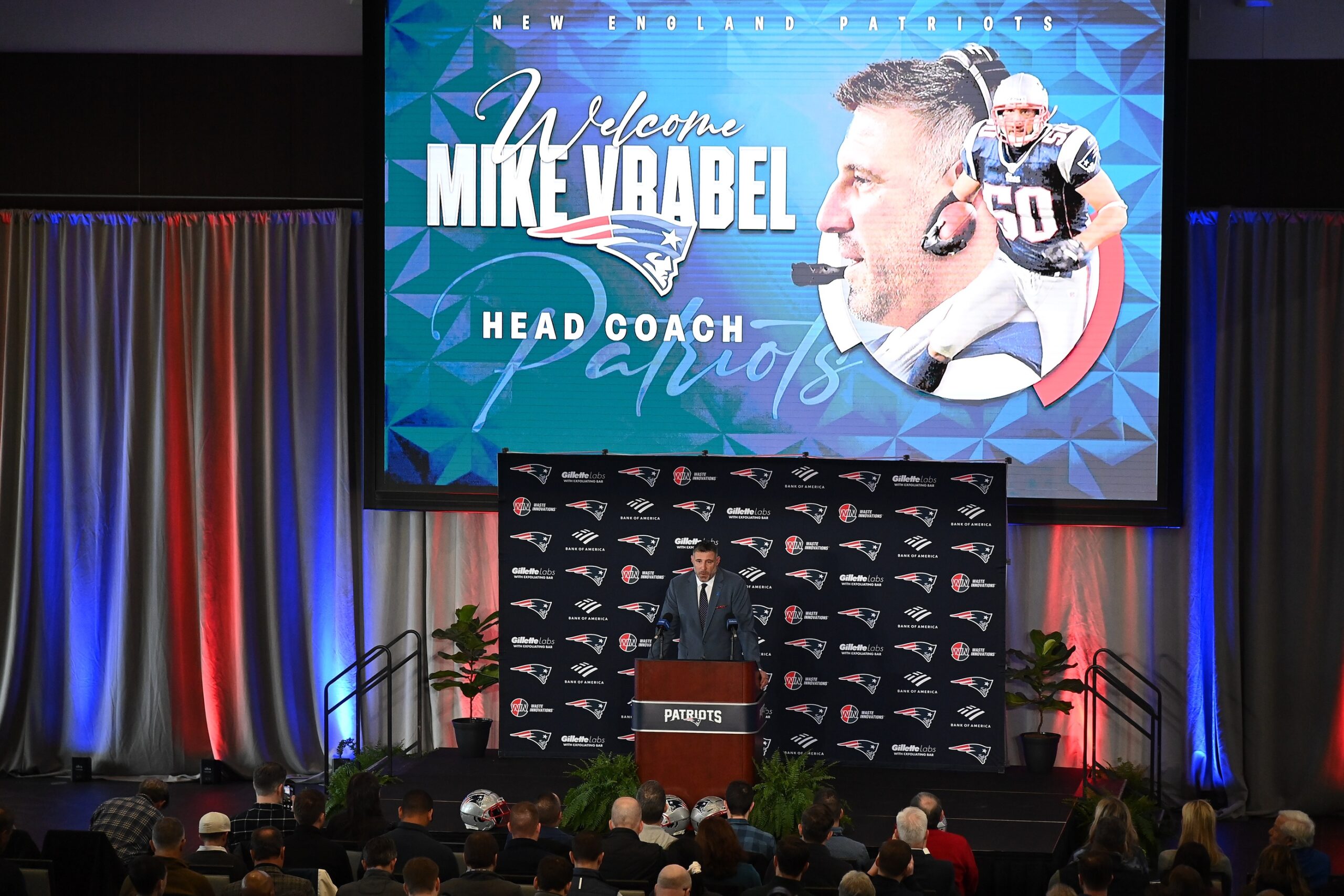
On what his philosophy is when it comes to developing a young quarterback and how he plans on helping Drake Maye reach his potential:
“Put great people around him. I would say that my involvement will be as it relates to game management and situational awareness, and where we are on the football field and trying to develop him as a leader of the offense. And when a quarterback, when they call the play, you want to say it like everybody’s going to believe that it’s going to score a touchdown. With that type of emphasis on how everything is going to operate. And Drake is going to be his own person, but I’m going to give him some things that I feel like are necessary to help us win football games. We have to be a very efficient passing football team. When you look at, statistically, of what wins in a National Football League, our ability to affect the other team’s quarterback and our ability to provide for an efficient quarterback and passing game is a high contributor to success.”
“There’s a lot of ways to do that by protecting the middle of the pocket and all those things that we’re going to talk about as we move forward. But how we protect the football, how we’re aggressive but not reckless, understanding where we are in the game and the situational awareness that I feel like I’ve developed over six years and in my past year in Cleveland. And I’d be remiss if I didn’t thank the Cleveland Browns organization for the opportunity that they provided me last year with Jimmy and Dee Haslam, and then Andrew Berry and Kevin Stefansky and all those coaches and players that allowed me to spend some time with them last year.”
On the fact it’s been reported that he’d like to bring Ryan Cowden to New England to help in the front office and if that’s something he plans on doing, or if there’s somebody else he might bring to the front office to help in that role?
“Yeah, Eliot and I will have conversations. As it relates to the staff, nothing has been finalized, nothing’s been determined. As with any staff, there’s going to be turnover, there’s going to be new coaches and new faces, some that I will have history with and some that I won’t. That’s what the interview process is. That’s what we’re going to do, as Tom mentioned about with the coordinators and being able to sit down with a bunch of coaches and be able to get the best and the right fit around our players.”
On the fact when he was inducted into the Patriots Hall of Fame, he said that this place is special, and after having been to a lot of places, what is it that makes it so special?
“The history of winning and the championships. I would like to thank the teammates that I had here in the eight years that I was here and the teammates that I had in Pittsburgh and the younger players in Kansas City that I learned stuff from. But that’s what I mean, the people, the history, and not that the banners that hang in our stadium, they’re not going to help us win, but I think it’s a great reminder of what it takes to win and the type of people that you have to have in the organization, the selflessness the work and the sacrifice that you have to make. So, to me, those are great reminders of what it takes. Just because those banners hang, that’s not going to give us an advantage on the field, but it’s going to give us a blueprint on how hard we need to work and the things that we need to do to be successful.”
On if he’s had a conversation with Drake Maye and also what his impressions are of his rookie season, watching from afar:
“Karen [Guregian], I’m smiling, Karen, because I know I look a lot older than I did when I played here, and Karen looks exactly the same way she did when she stood in front of me in the locker room. That’s amazing, Karen. Whatever you’re on, I need some of that. I need it. Yes, I’ve had conversations with players on our team. Who that’s been with. I’m going to try to, through the next couple of days, try to reach out to every player and the ones that are here rehabbing and that come through here and the ones that I’ll call and talk and ask what I can do to help and where they’re at in their offseason and how we move forward.”
“Everybody got here and will get here through a different avenue. Maybe we drafted them, maybe we signed them as a free agent, maybe we will sign them as a free agent. But none of that will matter. None of that will matter how we got here. The only thing that’s going to matter is what we do when we’re here. That’s the most important thing that I can tell them is that everybody, in my eyes, is starting over, and they will prove to us and to this team that their impact that they’ll make. We’re going to give those players an opportunity. We all have to be ready to take advantage of our opportunities. Some people get more opportunities, some people get less, but we’re all guaranteed an opportunity and will you take advantage of it when it comes?”

On in the wake of his success in Tennessee, after the experience last year in Cleveland, how that helped him evolve as a coach and if he’s a different coach today than he was at the end of 2023:
“One, I realized that I missed it with everything that I had in my soul, that I missed having the opportunity to lead, to help put a team together, a staff together, that I missed that. But I also embraced helping out the players and the younger players that allowed me more time to try to develop younger players that were on the practice squad, whether that be with the tight ends or the offensive line. I really enjoyed Kevin’s idea of putting a defensive coach or what would seem to be a defensive coach with the offense. I’m sure if you ask people in Tennessee, they would think that I was probably the third or fourth offensive line coach as much time as I spend in there, but I know how important it is to a football team and to an offense. And so really enjoyed getting to know those players, teaching them and helping the staff, helping the young coaches.”
“It just reminded me the essence of not forgetting all the small little details that are critical in coaching and teaching, to be able to work with young coaches and help them prepare interview them, have mock interviews so that they could develop. I always tell them, no one had a worse first coaching interview than I did. I think that’s documented, but it was with Urban Meyer at Ohio State, and it was guaranteed to be the worst interview that anybody’s ever had. I got another opportunity eight hours later, and I did a little better the second time. I was able to work with the young coaches and really just get back to focus on teaching and developing and what their style can be, and then the players, the fundamentals that are critical. We’re going to play with detail, we’re going to play with technique, we’re going to play with fundamentals. There’s going to be a brand of football that everybody associated with our team or our fans is going to be proud of.”
On what his top priorities are going forward to fill some holes on this team:
“Well, I think that player acquisition. I think you look at what’s available in free agency and what you can feel like you can sign and then see where you come out of that. But certainly, you look at the teams that are able to protect the quarterback and dictate the flow of the game offensively, making sure that up front We’re sound, we’re strong, whether that’s through free agency or through the draft.”
“That’s something that’s critical. The D-linemen are just getting better every year. They’re getting more disruptive. They’re getting bigger, they’re getting more powerful. And so as they try to affect our quarterback, we have to have some things that counterbalance that. And obviously, personnel is the first way. And then scheme and style and tempo and cadence and all those things. If our players can handle it, then we’ll shift, we’ll motion, we’ll go with different cadences, we’ll go on the ball and try to do all those things that cause conflict, but it’s going to not be at the expense of the players. And if the players can only handle a certain amount, then that’s what we’re going to do, and we’re going to get really good at it. We’re going to try to just focus on players that, again, we feel like fit us, fit into what we’re doing, that are willing to commit to the team, and then also try to find players that will hold each other accountable. We have to get to know each other. We got to peel some layers back so that you can hold each other accountable. Because if you don’t trust the guy next to you, you don’t believe in him, or you don’t know anything about his family or how he was raised, when you hold him accountable, then there’s pushback.”
“What we’re hoping to build is an environment that everyone respects everyone someone else, that we take time to talk and ask and listen. When somebody asks you a question, that you sit there and you take time to answer and listen to them. It’s important. And not just have a bunch of fly-bys in the hallway and be like, How are you doing? And then keep it moving. How are you coming out of that game? You know what I mean? There’s a little banged up. How are you feeling? But that takes time. Those relationships take time, and I’m excited to start building them.”
On how his program here will differ from the program he played in and coached against when Bill was here:
“It’s going to be all different players, new players, new coaches, some coaches that have remained, and people remember that. There are going to be some things. I’m not Bill, and I’m not Bill Cowher. I’m not anyone other than me. I’ve taken those experiences, and I’ve tried to form what I believe is critical to the success of a football team and an organization. But to say what those are going to look like, hopefully, just as successful. Our goals will be to win the AFC East, to host home playoff games, and to compete for championships. That’s what it’s going to take.”
“What the timeline is, just like we say with injuries, we’re not going to put a timeline on an injury, and we’re certainly not going to put a timeline on what those will be. But that’s going to be the expectations, and we’re going to work like crazy, and we’re going to compete like crazy. We’re going to give the players a plan, and they’re going to form an identity on the field and the way that we’re going to play and play for each other that they’re going to be proud of.”
“We just want to be good enough to take advantage of bad football. That’s where we’re going to start. That’s what I’ve tried to tell all the players is right now, I don’t know if we’re good enough to take advantage of bad football. I’m not sure. We’re undefeated right now, but if we can just work towards taking advantage of bad football and being good enough to when somebody makes a mistake, capitalizing on it and not being the ones that make the mistakes and focussing on the little things and the details and helping them do their job better, that’s a great place to start.”
On the fact he has a special and unique relationship with Bill Belichick and what it means to follow in his footsteps in this organization:
“I think it is unique, obviously. Let’s just be real for a minute and just say having played for him and competing against him, and then also having a friendship with Bill right?, along the way. I think it’s special, it’s unique having played here, knowing Bill. But again, we have to focus on things that are going to help us win now, help our players, and like I said, galvanize the building and the team and our fan base. I think that there’s also things I’m going to try to explain to the players that, ‘There’s things that are interesting, and there are things that are important.’ I think me having played for Bill is interesting. I just don’t know if it’s important to helping our players.”
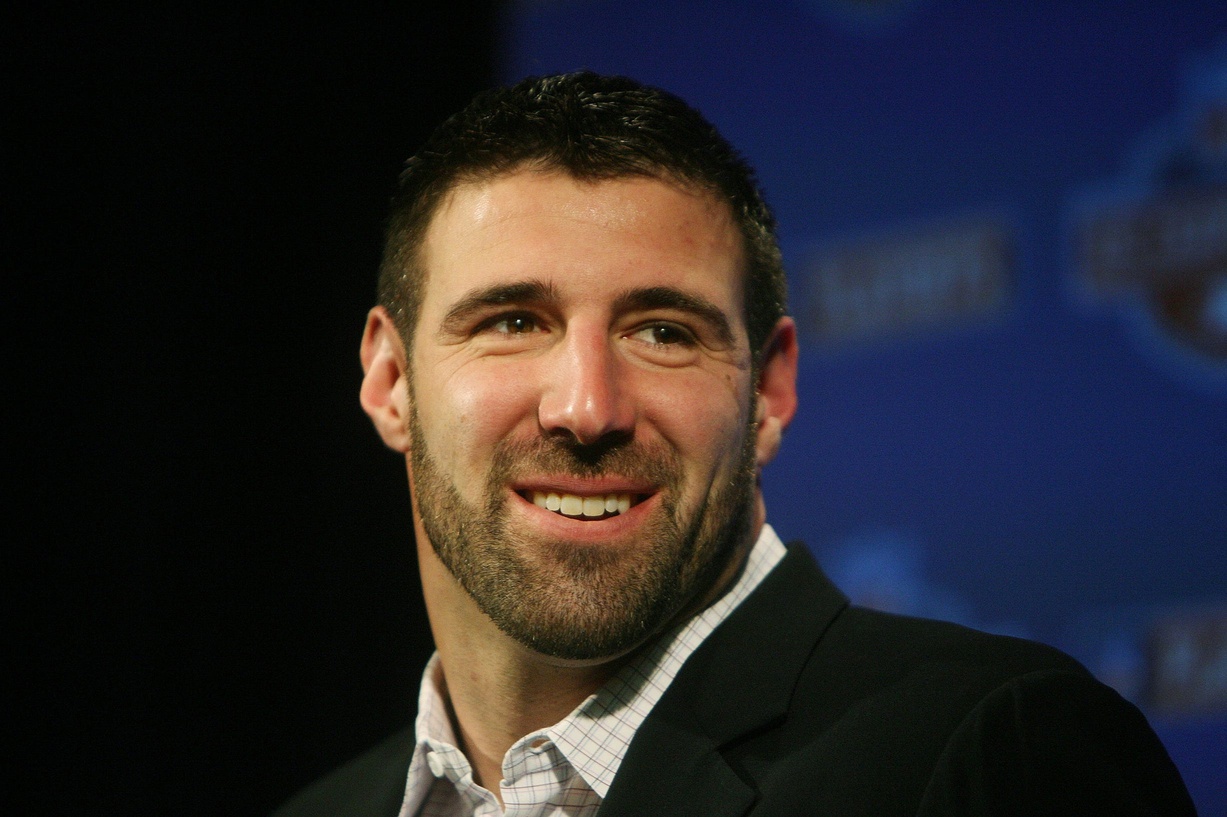
On the fact he was one of the hottest names in the coaching cycle this time around and what separated this choice from others:
“Well, I think that the ability to have open dialog with Robert and Jonathan was something that was critical. Eliot and his staff, obviously, what I believe and what everybody else believes is a young, dynamic quarterback. We have some youth on the roster. We have some veteran players that have kind of seen both sides of it and understand, and that will help me and will help our players get back to that success and understand how hard it is. I do think that we’re getting a different style of player, a different player to the NFL. Sometimes guys played four or five years in college in the same place under the same coach, and we don’t have a whole lot of behavior to change when they got to our league. I think now, with the NIL system that everyone is embracing and I’m all in favor of, but sometimes those players are at a school for six months, and they may go to another school with another leadership style and another structure. When they get to our league, there’s some behavior that may have to change, and we have to be willing to help them change it.”
“That’s okay. This is not an indictment on the college football system. This is just, you could go back and get a player from Alabama or Ohio State or Notre Dame where they had been there for four or five years, maybe they red shirted, and there was a consistent program, and you felt comfortable adding that player. Now, it’s hard to keep track of where they went to school. That’s not easy, but we’re willing to help those players that need to have some of those things changed and the commitment to the team, like, we’re willing to do that.”
On one thing he learned from his first experience as a head coach that he’d like to apply to his second time:
“I think there’s so much. This connection piece, man, getting to know these players. We’re going to put so many points of contact around our players that I understand that I’m going to have a different relationship with some players than I do others. I’m going to have a relationship with every single one of them, but then there’s going to be other ones that may not be as strong, but they’re going to be with the position coach. We’re not going to have a whole lot of roles. We’re going to start with being on time and being respectful and being able to communicate like anybody else would outside this building. If you were late for an appointment, if you had something going on, that we’re going to have people that are around the players for them to be able to trust and say, ‘Hey, I’ve got this going on.’ I’ve tried to do this in Tennessee that if somebody walks in the door at 7:45 and there’s something on their face that they’re wearing something, they’re holding on to something, that something’s not right, I would rather give that player 30 minutes or 45 minutes however much amount of time that he needs to take care of a situation, than the seven hours that he’s going to waste wearing it through the day.”
“I want to provide as many points of contact with the players so that they feel comfortable. And if that’s coming to me, great. If that’s coming to Eliot, great. If that’s coming to our strength coach or that’s coming to our position coach, whoever that may be, I want them to have as many relationships in the building that they feel comfortable saying that something’s not right or I need to communicate or I’m going to be 15 minutes late, whatever it is. So I think that that’s critical that we teach them some of those things that there’s more people that they impact than just themselves.”
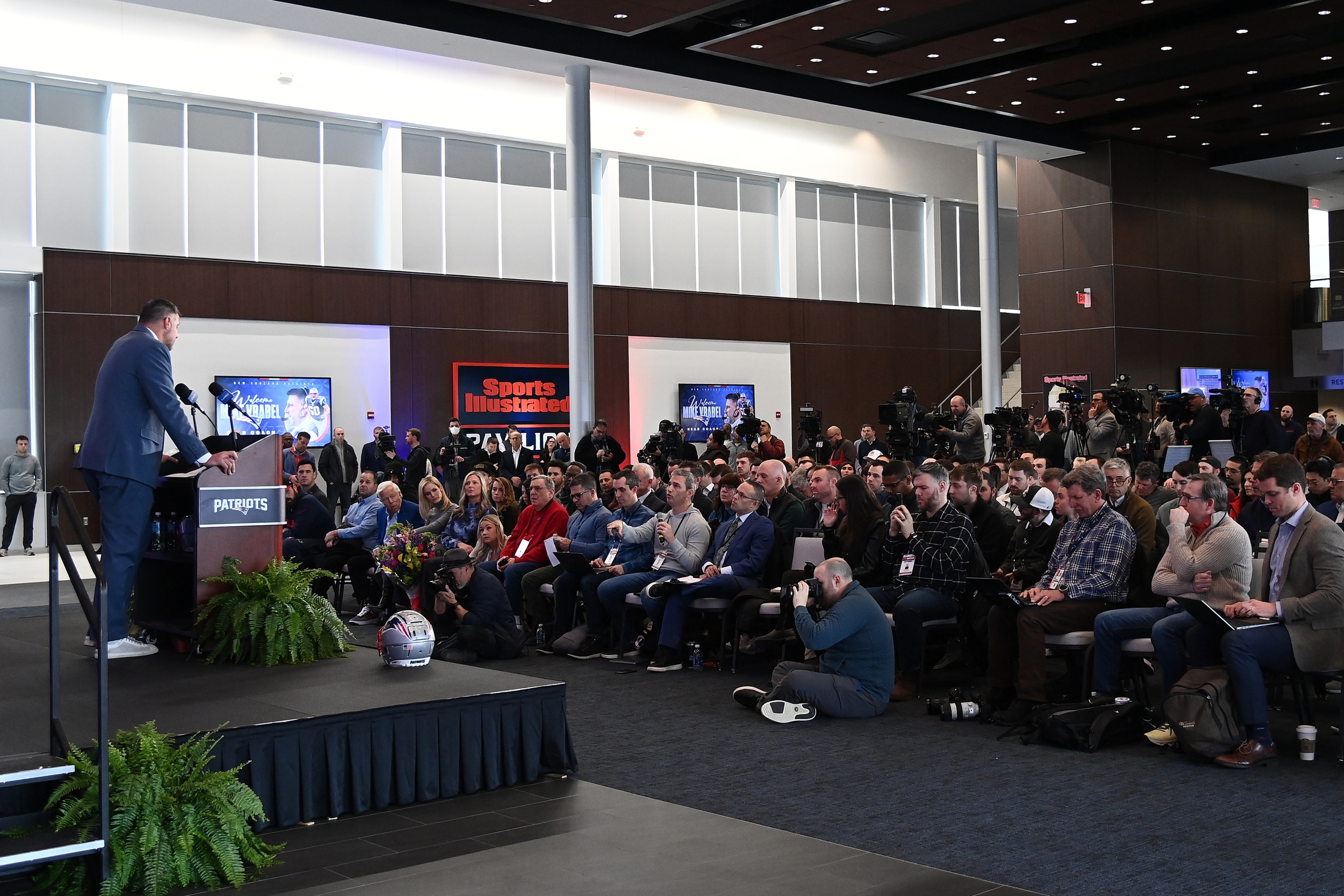
On the fact he said at the beginning he knew in his soul this was where he wanted to be, and if he ever envisioned as a player or even when he came back for his induction, standing up here as coach of the Patriots:
“I think probably more so when I started my coaching career. I think it was important for me to go somewhere else, to start another coaching journey. The opportunity at one point was probably presented itself to be here coaching, but I felt like it was important to forge my own path somewhere else.”
“If all those experiences led me back here at the right time and the right opportunity, then that was going to be what was meant to be. But not coaching I mean, not coaching the Tennessee Titans. That was never something that took my time. But I think that when I started my coaching career, I said, ‘Man, let’s go and let’s see where we can go and take this and work with other people. If the time’s right to go back, then there’ll be right time.'”
On how he’d describe what type of offense he’d like to run and how that ties into the traits he’s looking for in a play caller:
“Yeah, I think that the offense, again, we mentioned things like aggressive but not reckless. We have to be able to take chances. How do we create X plays without just having to throw the ball down the field 50 yards and just sit there taking shots? The creativity We want to be, I would say, versatile enough if the players can handle it. You look at zone scheme in the run game, being able to run gap scheme to things that the defense may do.”
“Be under center, be in the gun. But it’s also important to understand everybody has access to this and everybody has some experience with different types of offense, but it’s what the players can get good at. How much can you reasonably do? You don’t want to dabble in things and say, ‘We’re going to dabble in RPOs’ when the quarterback, that’s not a strength it is. Then being able to read and pull the ball and throw. There’s so much nickel pressure. How do you want to handle nickel pressure? All these answers and different things that defenses are doing, more split safety defenses, more simulated pressures, more disguised cover, two. Then being able to go on the ball and try to be able to use an offense that goes on the ball at times and dictates tempo, cadence. But again, it’ll be based on what the players can understand and what they can handle. We’re not going to put things that make them slow. Somebody told me a long time ago, ‘You can’t tell a difference between a player that’s afraid to do it or doesn’t know how to do it.’ They just stand there with that look, and we’re not going to stand.”
“We’re going to be moving. We’re going to demand effort and finish. People ask what non-negotiables are. Our effort and our finish is going to be the contract that we make with our teammates. That’ll be something … that’ll be my job to make sure. That’s the greatest compliment that you could ever give a coach, by the way. Not that he has great plays or great blitz. It’s, ‘Man, you guys, your players play their ass off.’ And trust me, when somebody that’s a respected coach tells you that, you’ll thank the players and you’ll care about them, and you’ll do whatever you can for them, because that’s the greatest compliment that you could ever get.”
“Time to get to work.”
EDITOR’S NOTE: The above is done with the available footage and is subject to typographical errors. If you spot an issue, please let me know in the comments.
Support Us: Help Us Compete Against The Corporate Media Giants
We need your help. If you enjoy our content, please help us beat Google's Corporate algorithm by adding us as a preferred source on Google News.
Click the button below and check the box next to "PatsFans.com"
Add as a preferred source on Google News
Ian Logue is a Seacoast native and owner and senior writer for PatsFans.com, an independent media site covering the New England Patriots and has been running this site in one form or another since 1997.
More Patriots News Headlines:

MORSE: Notes From Patriots Training Camp Day 5
By: Mark MorsePatriots training camp Day 5 saw pads come on, highlighting WRs like Kyle Williams and AJ Brown, QB play from Drake Maye, and defensive performances.
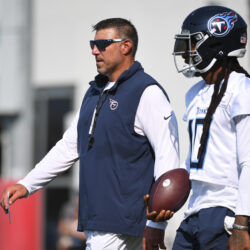
Vrabel Confirms DeAndre Hopkins’ Patriots Departure
By: Ian LogueVrabel confirms DeAndre Hopkins' brief Patriots coaching stint has ended. The former wide receiver's departure occurred during training camp.
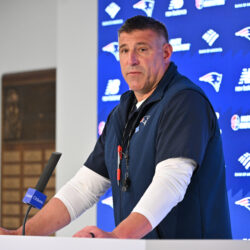
TRANSCRIPT: Mike Vrabel Press Conference 7/30
By: Ian LogueHere's the full transcript of what New England Patriots head coach Mike Vrabel had to say during his press conference on Thursday, July 30, 2026.
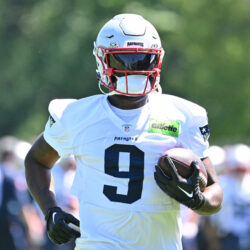
MORSE: Notes From Patriots Training Camp Day 4
By: Mark MorseAnalyzing Day 4 of Patriots training camp, Kayshon Boutte shines w/Drake Maye, Christian Gonzalez contract talks, and Gabe Jacas's injury mystery deepens.
Morse: Notes From Patriots Training Camp Day 3
By: Mark MorsePatriots training camp Day 3 notes reveal Gabe Jacas's rare injury waiver contract, plus updates on AJ Brown, Kayshon Boutte, and depth chart battles.