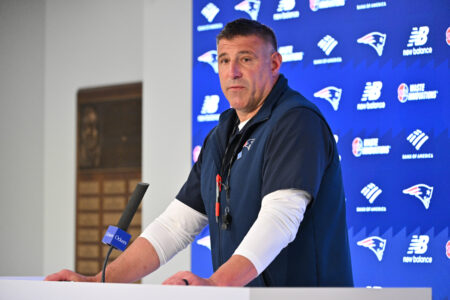




Here’s the full transcript of what former New England Patriots quarterback Tom Brady had to say during his recent appearance on The Herd with Colin Cowherd back on June 19, 2024.
Well, the man needs no introduction. He is now at Fox. You’re going to see a lot of him. His process has changed. Tom Brady, seven-time Super Bowl champ, five-time MVP. It’s great to finally see you in person.
“Same here.”
I know I ended up on one of your documentaries saying stuff that I regret now.
“Now that we’re teammates.”
Now we are teammates. I apologize for everything, Tom. Let me start with this. You’re a process guy. My wife and I talk about this. She’s a project woman. I’m a process guy. She likes big projects. I think to myself, you were the ultimate process guy. Like [Nick] Saban, [Bill] Belichick, you process people. And then the process goes. Did you wake up a week after and think, ‘Maybe I should play golf?’ Was losing the process, has it been a challenge?
“I think any time you transition into something new, there’s a bit of a challenge because you’re so programmed and wired to do things a certain way. As an athlete, there’s so much physical prep that goes along with your life. Even in the offseason, I was always thinking about, was I prepared? If there was a game on Sunday, could I play? I would think about that in April and May and June and July. I would watch other great athletes, Floyd Mayweather comes to mind. He always seemed ready to go.”
“If someone called him, say, ‘Hey, you got to fight on Saturday,’ he’d be like, ‘Cool.’ I think that’s how I always physically train my body. Mentally, it was a little bit different because there was a whole game plan element to the process of preparing for the games. So I think the biggest challenge for me is the structure is very different now in my life because you don’t have the routine. But I actually believe that the broadcasting at Fox this year for the first time will give me a lot more structure like I’m used to, and I really actually will look forward to that.”
So you were in the booth this weekend. UFL Championship. So it’s your first taste of doing it. You’ve also been probably a half dozen times that I’m aware I’ve been practicing upstairs. So I want you to take me from the first time you put on a headset upstairs until the UFL game and your last, you may have practiced today. When you watch the tapes, do you notice a difference with you?
“Yeah, I would say yes. I also think there’s still so much more room for improvement. It’s almost like when I was a player, I never felt like I did things the right way. There were games where I’d go in afterward and think, ‘God, I’m the worst quarterback in the NFL. Why would they even want me to play quarterback for this team?’ I’m sure I’m going to feel that way here at Fox, where I finish a game and I go, ‘God, I didn’t even give them what they wanted.’ It’s a very challenging thing in your own mind. I’ve asked a few people, ‘How do you know that you did a good job?’ I think for me, so much of this is going to come down to the preparation. Did I feel like I was prepared? Did I feel like our crew was prepared? Did I give them the best over the course of the week so that we could give ourselves the best opportunity to be successful for the fans? Because really, the game is the show. We’re there to add our take on it and our analysis. But it’s also, did we feel like we added to the broadcast? And from my standpoint, I’m going to work as hard as I can on the process of it, as you talked about earlier, to make sure that I do deliver, because I don’t want to let anyone down. I don’t want to let the people at Fox down. I certainly don’t want to let the great NFL fans down either.”
Well, both quarterback and broadcaster takes the ability to compartmentalize and then quickly pull things and put them in a game. So it’s very similar is that when you went into a football game, there were things that you practiced, waited to see, that may not happen until the fourth quarter, and then you have to take that film study, fourth quarter, loud crowd, can’t hear and implement it. That’s what broadcasting is. I’ve said this before, Tom. I think what you’re doing is the hardest thing in sports. 200 times for eight seconds, be smart. I kick it all the time. People are just used to it.
“I think you do pretty good.”
I’ve done fine. Are there nerves for Tom Brady? You haven’t had nerves forever, right?
“I always had nerves because it’s a performance when you go out there on the field and you would feel like you put a lot into it. There was probably anxiousness and there were nerves because the outcomes weren’t guaranteed for any of us. You’d go into a game, you’d feel like, ‘Oh, we got a great advantage this week. They got a few of their guys out. We’re playing at home. This is exactly the game we want.’ Next thing you know, it’s middle of the third quarter and it’s a dogfight. You never really know how sports are going to go, which is why we all tune in. We tune in because the outcomes are very unexpected, which if they’re unexpected, there’s a chance of winning and losing.”
“Because of that, there’s anxiety and there’s nerves going into every single one of those games. The only way that I knew how to combat the nerves and the anxiousness of the game was to prepare. I was someone that got really good at my preparation over the course of my career. I got really efficient with my time, especially as you added a lot of the things to your life, like children. That’s a big addition. It’s how can I prepare knowing that I have other things going on in my life? I really want to be efficient with my time to make sure the time I am spending preparing is really worth it. I’m working on the things that are actually going to add to the broadcast rather than just working on things to work on them that will actually never come up.”
I’ll throw a theory at you, and I’ve used you as an example on this show and Matt Stafford. Offensive lines matter. I believe offensive line play has deteriorated due to the CBA. They practice less. I think it’s the most cohesive unit, and they’re practicing less. Outside of the lions, I’m not sure there’s a great O-line in the league right now. Theirs feels to me very powerful. What worries me, I saw this with Russell [Wilson] first year in Denver. I saw it with Aaron [Rodgers] first year with the Jets. The reason I think you succeeded, and Stafford did, and Kirk Cousins will, because older quarterbacks are a bit more reliant on guard-center guard protection.
“It’s very important.”
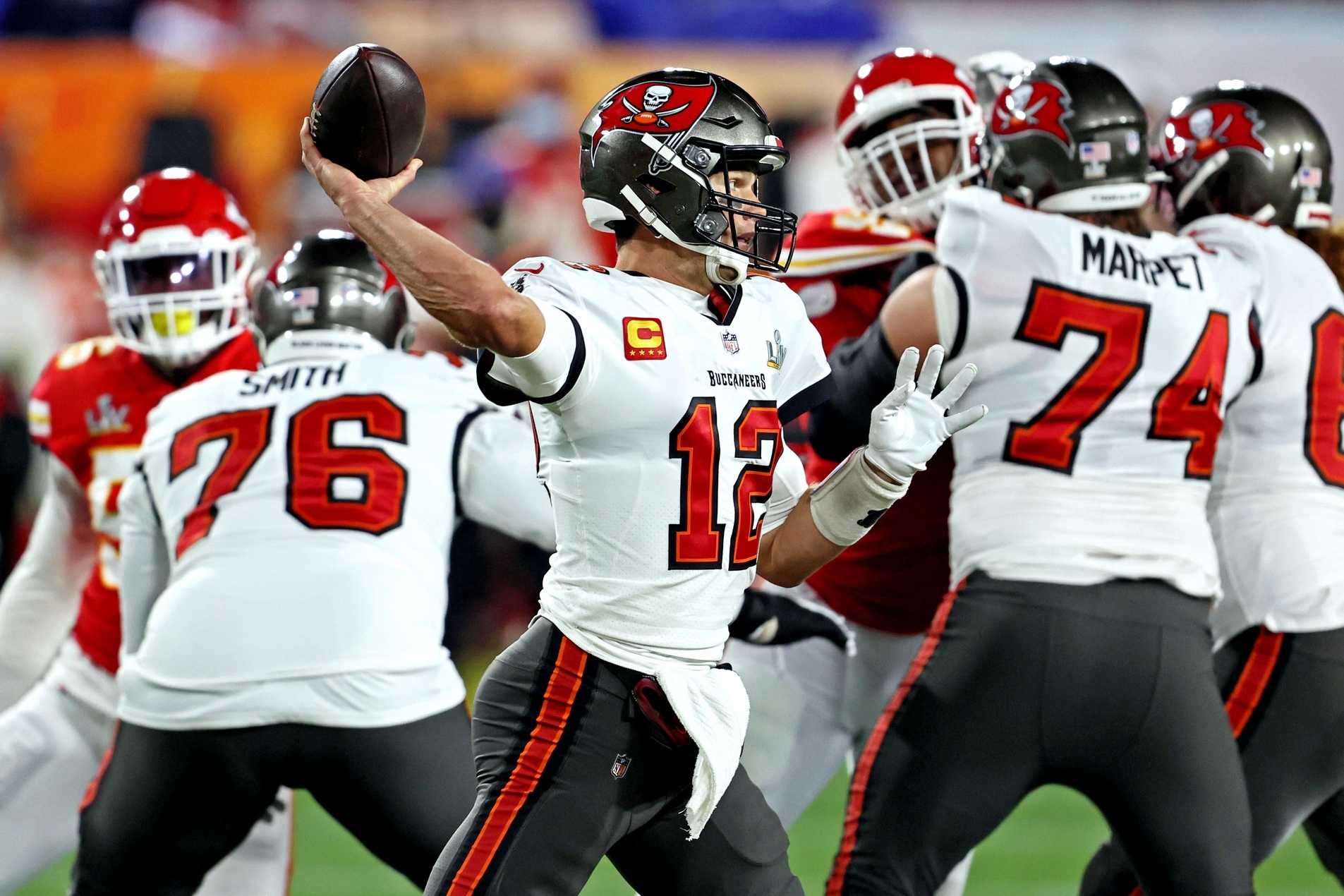
In Tampa, you got Tristan Wirfs. You were very good, with guard, center guard. Sure. And you got very comfortable quickly. That’s what I worry about the Jets, is that two things are converging, Tom. One, they’ve got all new offensive linemen, and two, many are older, and older offensive linemen don’t play in the preseason anymore. I don’t worry about Aaron. But take me through that. You went through it with Tampa, where you had to move. When you wanted Gronk, it may have been for blocking as much as catching.
“Sure. Yeah, There’s so many nuances to the success of an offense. I don’t think you can ever make a bad O-line good. And over the course of my career, I always, I believe I played with the best offensive line coach in the history of the NFL, Dante Scarneccia. Regardless of who we drafted, free agents, we got free agents in the draft, free agents in NFL, free agency, veteran free agency. We always pieced together a unit that played really well together. All of them may not have been Pro Bowlers, but as a unit, they played as well as any team in the league.”
“That was a tough challenge for every D-line you would play. You’d go, ‘Okay, I know they’re going to block us well. I know the ball is going to come out quick. I know they’re going to have good plans when we play man coverage, they’re going to have man-beaters. I know when we get in the red area, they’re going to challenge us. They’re going to have some different schemes in there in the run game that we’re going to prepare for.'”
“We put a lot of pressure on the defense all the time to do things the right way, as opposed to the five offensive linemen, having a draft, first-round pick, first-round pick, first-round pick to put together a great O-line. So much of great O-line play is a great O-line coach. I think we could talk about there’s not a lot of great O-line coaches anymore in the NFL.”
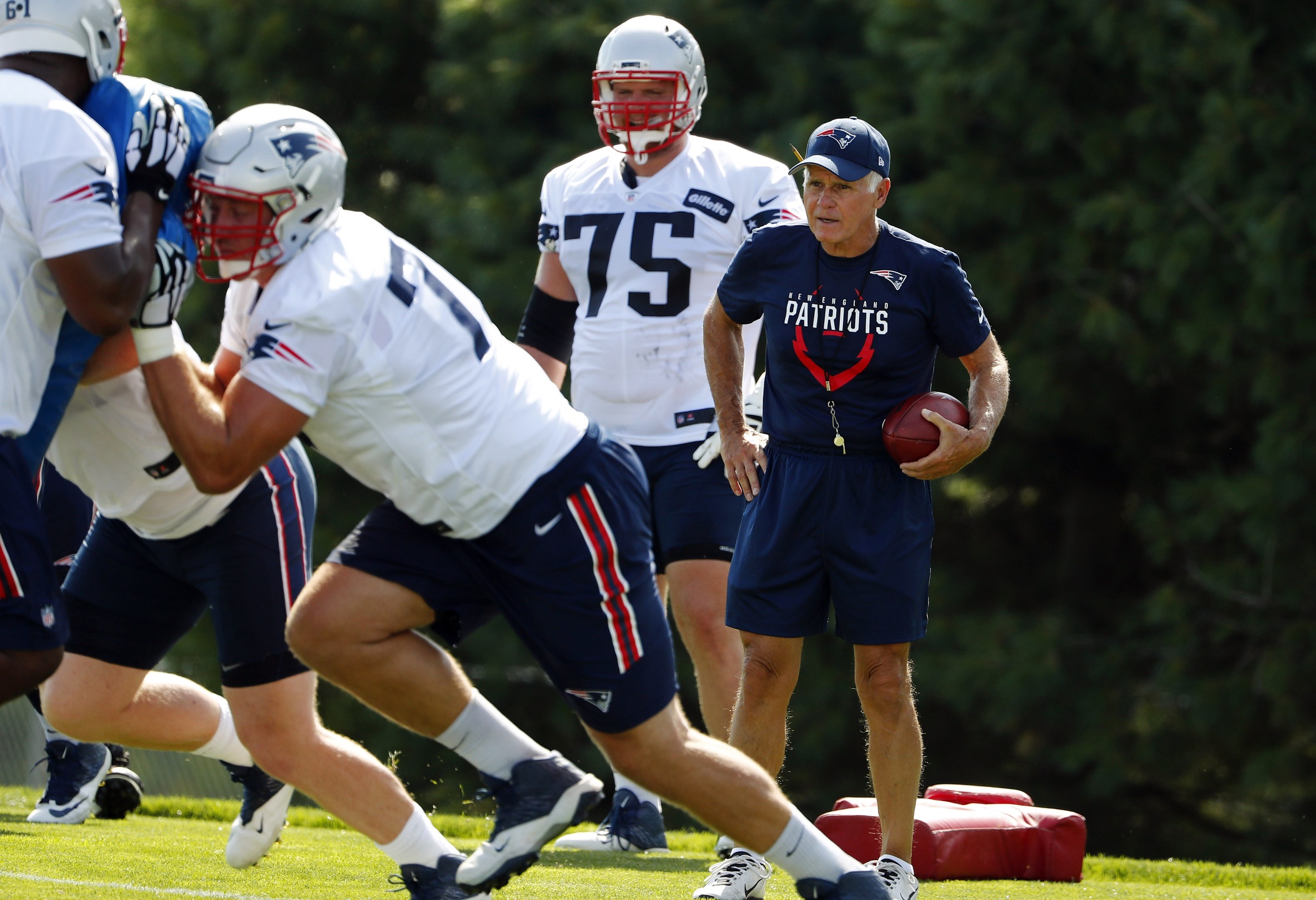
Jimmy Johnson has said for years, there’s about six good ones on the planet at any one time.
“Absolutely. And there’s probably about six to eight good quarterbacks on the planet. And there’s probably about six to eight good head coaches, and there’s about six to eight good defensive coordinators. So to try to get all the things right, which is why the NFL is so competitive in my mind, because there’s so many challenges to keeping people together. Because when you have a good O-line and everyone says, ‘Oh, this is the first-ranked or second-ranked or third-ranked offensive line.’ Well, in free agency, all the teams come in, they pick those guys out of that team and say, ‘All right, well, we were going to bring you from the Patriots to the Bengals.’ ‘We’re going to bring you from the Patriots to the Chargers’ because they knew that our guys were developed really well also. So we would lose a lot of offensive linemen, and you’d have to replace them, and you’d have to develop them.”
“I think one of the pet peeves I have, one of the great things I would say in my experience with the Patriots was every player was coached. Ev’en if you were on the practice squad, even if the scout team offense was out there. Dante Scarneccia was coaching the scout team offensive line as if it was a starting offensive line. I think a lot of coaches coach, Hey, I’ll just coach the starter, maybe a few backups,’ as opposed I’m going to coach every single position. When people go down, we’re going to fill those guys in and they’re going to just step in and play a great role for us because they’re going to know all the calls, they’re going to know the timing, they’re going to know the precision, they’re going to know exactly what we want to do on every play. That was the development part. I think, yeah, the CBA changed a lot. There’s less practice time. I don’t necessarily love that.”
“There’s a lot of areas of, say, the techniques and fundamentals, which because you don’t have the time, tackling, run after catch, special teams has basically been eliminated from the NFL with a lot of the rules. So that saved some time, but you lose the kicking game, parts of the kicking game. I think there’s a lot of… Because we don’t have as much time on task, there’s a lot of less time for us to develop the techniques and fundamentals that these players need to be successful.”
“So they go to the outside and they look for coaches in the offseason to develop some of those things. Some of it works. It may work as an individual, but at the same time, football is a team sport. I would see quarterbacks throwing the receivers that weren’t their receivers. Well, that’s fine. It might be good for you, but it’s not good for, let’s say, the team.”
Before I get into some other stuff, I’m going to be a little bit of a fan on my last question, but I want to ask you this. I have another theory. Is that this is subconscious, and you were able in a better spot to handle this. But I have been arguing for years that number one, receiver, there’s a duality to it. They’re great. Randy Moss is great. But subconsciously, even a great quarterback will feel, to some degree, he’s indebted to get him the ball.
“Always.”
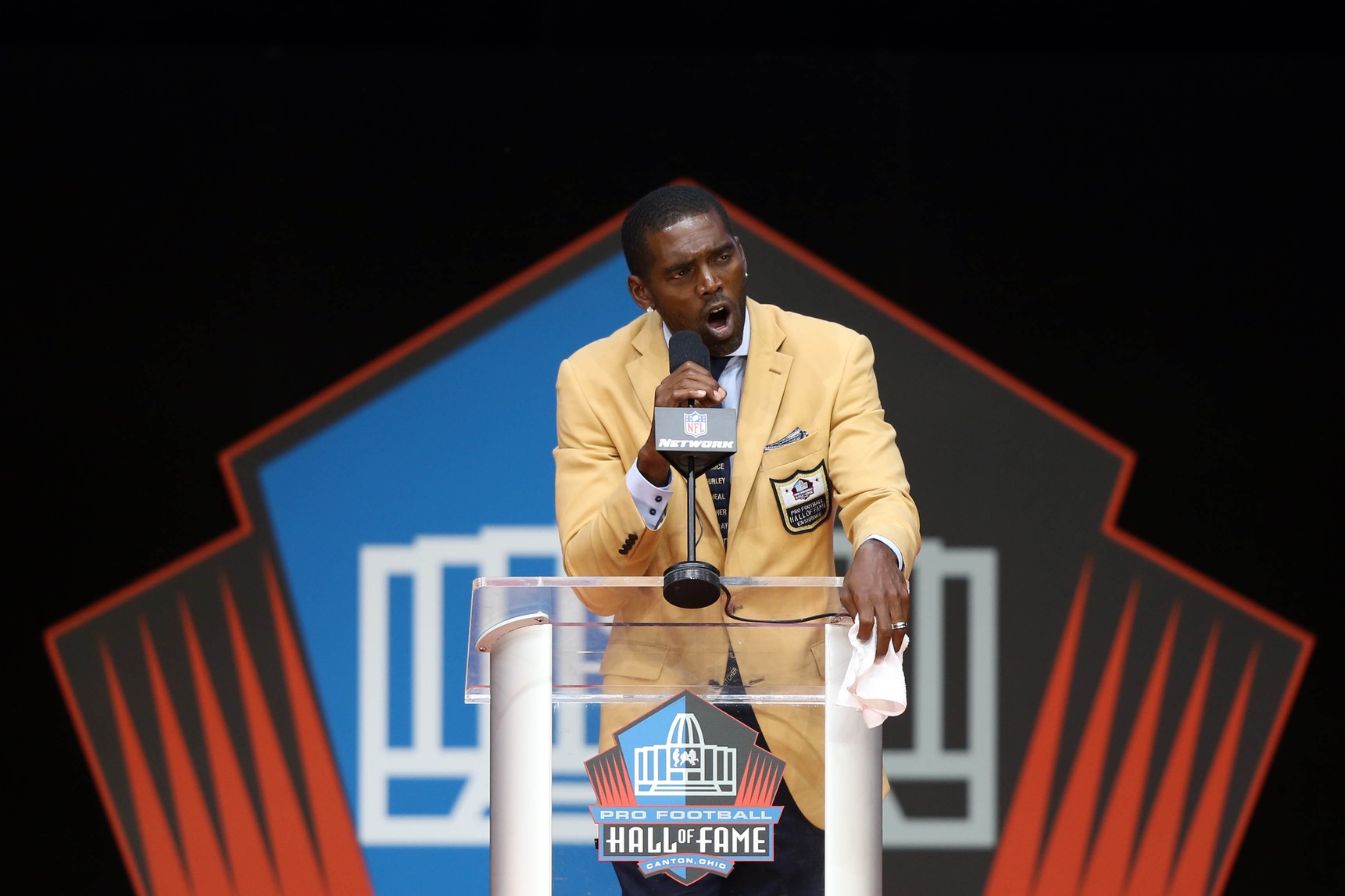
I thought when Dak Prescott broke into the league, he was better without the great Dez Bryant. The pressure left. Sometimes, receivers are verbal. Stefon Diggs, I would take on any team, but he’s verbal. Brandon Aiyuk is verbal on his social. I want you to go to that as I have argued, now, Justin Jefferson, to me, is too good not to sign. But I have always had this feeling, and if you could, subconsciously, when Randy [Moss] was there, he rewarded you. But Was there a feeling sometimes, Where’s Randy? I want to make sure Randy’s happy.
“Sure. Yet you always felt like you had to do something to get them the ball. If they hadn’t touched the ball in practice, I’d make sure, ‘Oh, God, hey, I got to get so and so ball’ because I want him to keep running hard. I want him to be ready for when the ball does come in. You see it a lot in NFL games. Been practicing a lot of these games. I want to see the best players touch the ball early so they can break a sweat. They can get into the flow of the game. Good coaches do that. When you script plays at the beginning of the game, you’re saying, Okay, you’re the Niners coach. ‘I’m going to make sure McAfree touches it either first or second in the game. I want to make sure Debo Samuel touches it first or second in the game. I’m going to throw it to him quick. Somehow I know the ball is going to be in his hands so he can do something with it. I want to get him into the flow.’ We would always try to script so that everybody would feel like they were in the flow of the game.”
“The last thing you want is your number one receiver to go two and a half quarters into a game and not see a ball to get one target because he’s going to get discouraged. He’s got to go out there. He’s got to break the huddle. He’s got to run out 25 yards to his alignment. He’s got to run down the field as fast as he can, try to get open. He’s got to run back to the huddle. It’s a lot of effort that he’s putting into not getting the ball. When you can reward that guy early in the game and figure, ‘Okay, where is he at? How do I get him the ball?’ There’s certain guys that are really easy to get the ball, too. Certainly the guys that line up closer to the ball, the tight ends and the slot receivers, there’s way more route options for them. It’s way easier to get them the ball because they can go to basically every part of the field. Whereas that perimeter receiver, he’s got the sideline to deal with. H[We really can’t break out. If he breaks out, he’s got five or six yards to deal with.”
“A receiver at the tight end position or in the slot, when he breaks out, he’s got 18 yards to deal with. So you have much more space to get him actually the ball. So it wasn’t hard to get [Wes] Welker the ball. It wasn’t hard to get [Julian] Edelman the ball. It wasn’t hard to get [Rob] Gronkowski the ball. It was hard to get a perimeter receiver the ball. If they decide that they want to take a perimeter receiver out of the game, you just roll the coverage to them. You play cover two. You jam them at the line of scrimmage with someone over the top, and it’s very, very difficult to get that guy the ball. But that also gives a lot of the things, and you got to be able to take advantage of those things. And that number one receiver has to understand, ‘Okay, they’re making concerted effort to take me away. Therefore, my other teammates have to produce when they’re playing these coverages.'”
Sean McVay, years ago, did something that it was a Maverick move, a baller move. He said, I’m not going to play my veteran stars one snap in preseason. And people were like, ‘Whoa, whoa. You’re not going to be ready.’ They went 8-0 to start the season. And now people look at it and go, ‘Yeah, I don’t want anybody hurt.’ Now, there is a line here because you’re going to want a couple of series of snaps. I get it. You don’t want to go cold. But it is interesting that I believe, and you have touched on this, that the NFL is the shield and corporate. And a lot of these coaches, there’s a dogma and a rigidity, and they just don’t want to change stuff, and it’s hard to flip the telescope. And I think coaches struggle allowing quarterbacks like you and [Drew] Brees, it’s your offense. Go to the line and call what you see. I think quarterbacks can be overcoached at the line of scrimmage, not at practice. Sure. You have touched on the fact that you don’t think quarterbacks are developing that sort of pre-sense snap. Is some of it the rigidity of coaching?
“Yeah. And the ability to develop that player, to give him the tools so that when he gets to the line of scrimage and he sees blitz, ‘Okay, if they’re blitzing me these, are the two protections I can use when they blitz. These are the two or three routes that I can signal to my receiver that can beat the blitz.’ Or vice versa. We’re anticipating blitz, so we call a play that’s going to protect. And, no, they’re actually playing a very safe zone. I want to make sure I can get all my players out into the route and I can change the call, the protection and the route so that everybody can get into the defense. What are you trying to do?”
“You’re trying to give the quarterback to to really be a field general. Quarterback, you got the last swipe with the pencil. The defense can call their play. They’re going to line up. Offense calls a play in the huddle. They walk the line of scrimage. Defense calls a play. They adjust to the formation offense is lined up in. They have their call set. It was always my job to say, ‘Well, I know what my play is. Now I look at the defense. ‘Okay, I think I know what they’re in. Does what I have call, is it going to work?’ That was my judgment. They would have to live and die with my judgment, the entire team.”
“Now, I developed the trust within my teammates and organization to say, ‘Tom, we want you to have that. We trust you to have that final swipe with that pencil, but we’re not going to snap the ball into, let’s say there’s a safety blitzing off the right side, and I got to run Right at the right at the right side, and I know that nobody can block him. I’m not going to snap the ball and run it into the strong safety blitzing and tackle our running back four yards in the backfield.’ I’d say, ‘Okay, if the strong safety is coming on the right and we got to play to the right, what do you want me to do? You want me to run to the left? You want me to check to a pass?'”
“Those are the options. That’s how I would think about the game. There was always a reason why I did something. If he was blitzing off the left and I wanted to run the right, great. Let’s snap the ball as fast as I can.”
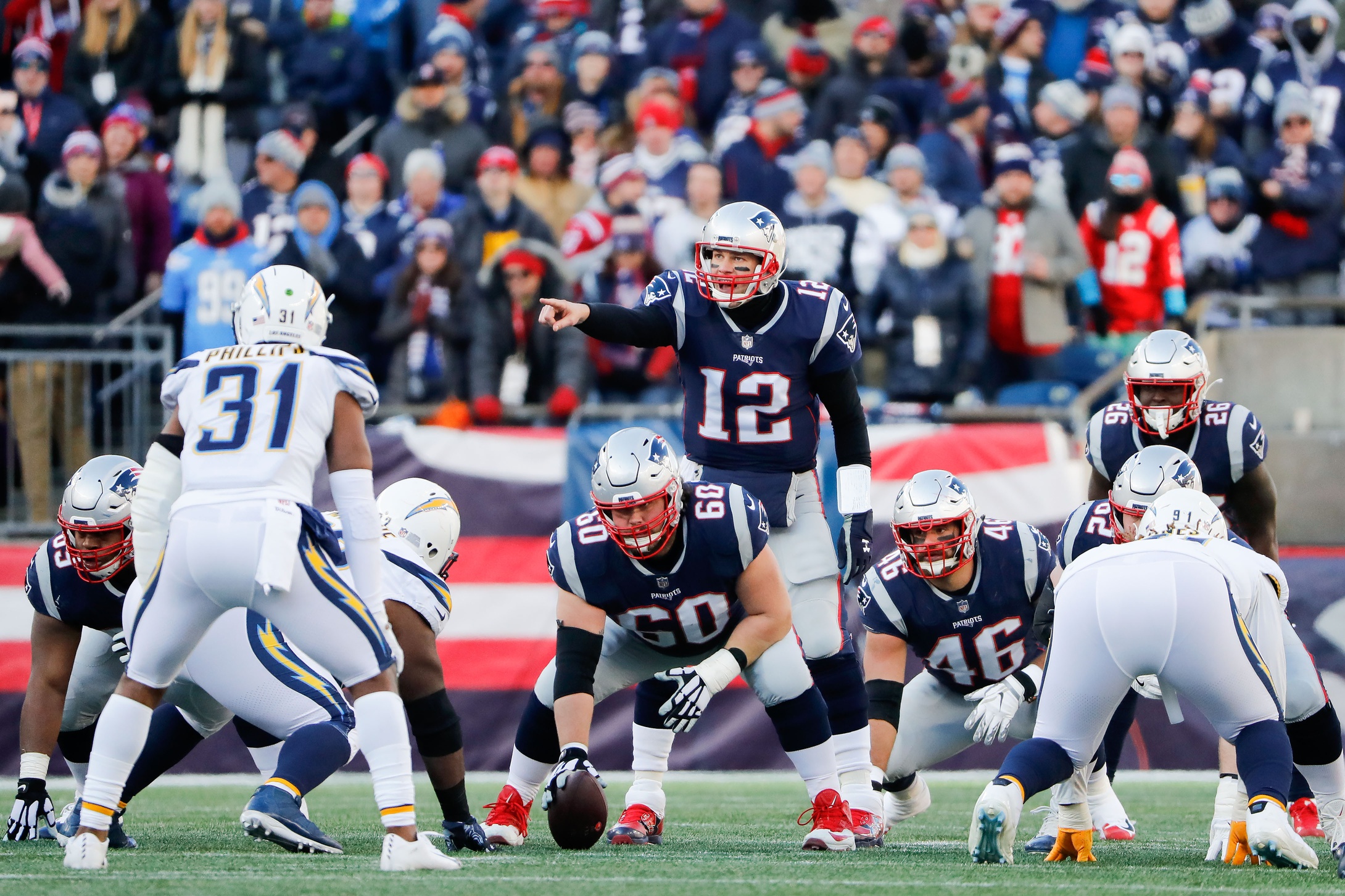
Everything’s intentional.
“Everything was intentional. Yeah, there wasn’t a time. I would hope that I would have never snapped the ball into a bad defense. Now, did I? Of course I did, because sometimes the defenses wanted to disguise a lot of things. They didn’t want to show me, ‘Okay, Brady likes to get a great pre-snap read. Let’s really mess with them. Let’s toggle the safeties back and forth, and we’re going to make it challenging for him to really decipher’. Buffalo, when I played Buffalo, they wouldn’t move until after the ball was snapped. So if the safety was coming down on the left or on the right, they were going to do it after the snap all the time. And they would just play in this little shell defense, ball be snapped, and here they go, they rotate. Because every defense has strengths and weaknesses to it.”
“My job as a quarterback was always to delineate where the strengths and weaknesses were. And was the play that I had called, was it able to take advantage of the weaknesses of the defense? And if it couldn’t, then I was supposed to get to a play that would. I think that’s part of the development that I had as a player was they gave me the tools to be able to do that. And they gave me the trust over a period of time that I was ultimately going to make the right decision for the team.”

Intentional is sometimes confused for intensity. Knowing and reading the temperature in the room is important. There’s a story about John Wooden, the late legendary coach, and he was very strict, the pyramid of success. He felt his team before a championship game was tight. So he made the decision. He said, ‘All we’re doing is dunking at practice today.’ Everybody was having fun, and he sensed the temperature in the room. ‘My team is tight. We got to have a fun practice.’ You had what I would view as a highly efficient, don’t-mess-around head coach. …
“That’s a polite way to say that.”
Yes. I’m trying to be very diplomatic.
“Good job.”
I would think you would have to provide the question I’m going to ask. Were there times, because of Bill’s manner, that you felt on a Saturday night when you go into that meeting, ‘We were way too tight. I got to lighten this room up a little.’
“I think the answer would be no. I think that’s where Bill was actually so great. No one saw him in those moments like we did. On Saturday night, we were so prepared and so focused. We were the opposite of tight.”
Really?
“We were always relaxed because we had the answers to the test. I knew that I went through the call sheet. Let’s say we had 150 calls on the call sheet. There was a meeting at a squad meeting at eight o’clock. I would meet with the quarterbacks starting at 6:30 in the offense quarter. We’d go through every single play on the call sheet, and we’d do exactly what we did. Okay, this is a play, this is the run. ‘What’s the one thing that could mess this run up?’ Oh, a safety blitz off the right side. Okay, great. ‘What do you want to do if that happens?’ I’d walk to the line of scrimmage. That call was made. I’d break the huddle. I’d look to the line of scrimmage. I’d say, ‘Okay, the only problem I have on this play is if the safety is blitzing off the right side.’ Then I would just look for it. He only did it, let’s say, 5% of the time. Most coaches would just say, ‘Ah, just run the play, whatever. If they get lucky and call at the same time, one for them.’ That’s not how I played because that one play could mean everything. I would say, No, if it’s a 5% chance, it could happen. What should I do if it happens? We’re all on the same page.”
“I would tell the line, ‘Okay, if this guy’s blitzing, this is what I’m doing. I’m going to check to this play. Called Wolf, or called Beetle, or called Python, whatever we wanted to call it. This is what I’m going to do. Or I’m going to check to a screen, ‘Liz, Rip.’ I’m going to change the protection and go to ‘Greta’ or ‘Grape.’ So there was all these different code words that we had that we can get to them so quickly because it’s hard to do when there’s 70,000 fans. It’s hard to do to communicate to everybody in 10 seconds to go from one play to another play. But that’s what the continuity allowed us to do over a long period of time. That’s what the same coordinator, the similar core group of players could do, the same offensive line coach. ‘Oh, yeah, we did that two years ago.’ Yeah, I like that solution. That worked great. That allowed us to win the game. Great. We gained confidence in it. That continuity that we had with all of us allowed us to succeed in those little small percentage chances that they did something or made a call that could beat what we were doing.”
“I think so much that’s what the beautiful part about the sport is. That’s the chess game in football. It’s not checkers. It’s not soccer where everything’s reaction. It’s not hockey. It’s not basketball. They’re all set pieces. There’s a play. When I looked at the real field generals, when I played growing up with… Well, that was John Elway, Dan Marino. Then you got to the Peyton Mannings and Drew Brees and Philip Rivers. That’s all we tried to do. We tried to say, ‘What’s the defense doing? And how can we beat the defense on every single play?’ And then we’d come out of the game. That’s how we would judge ourselves. Did I make the right call there? Not always did I make the right throw. Did I snap the ball into a defense that that play would actually work?”
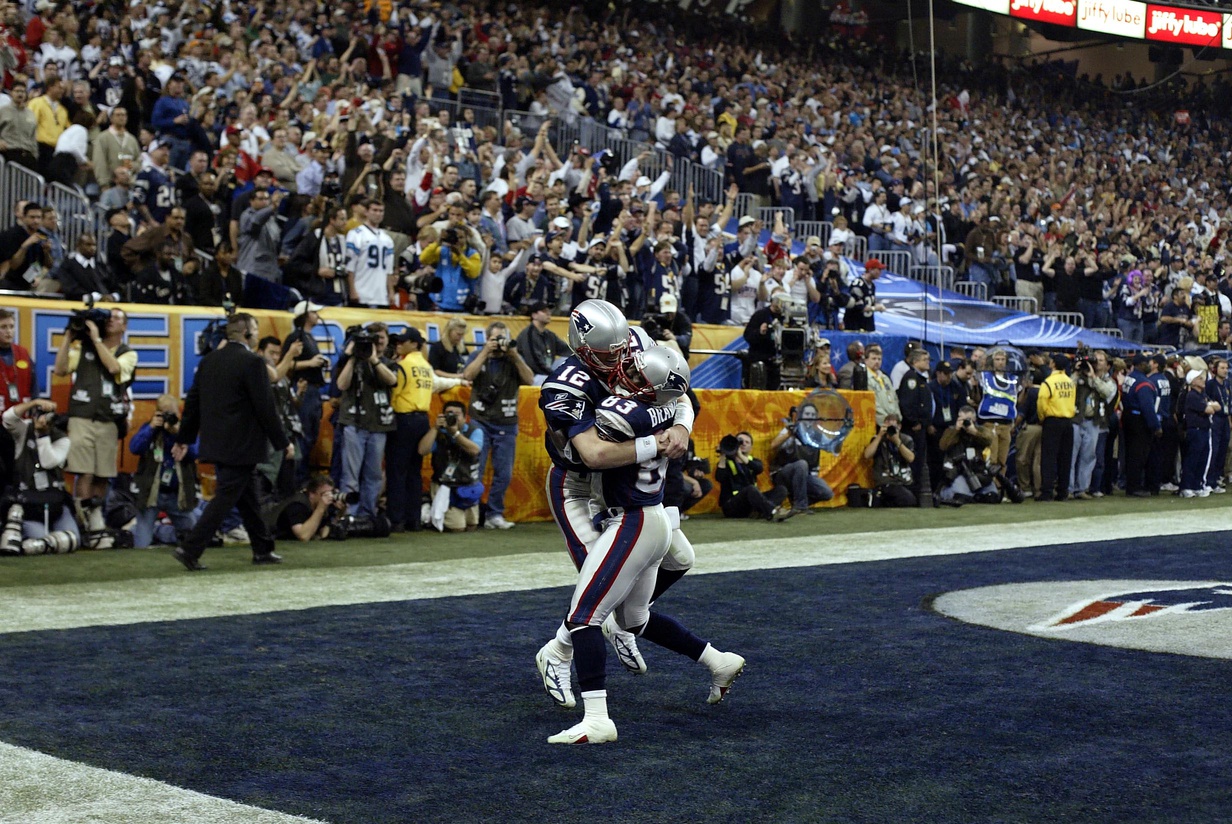
This will be really dorky. But I always thought you were the best cold weather thrower because of your torque I’d ever seen. Didn’t mean you had the best arm. You’re the best cold weather thrower. And you made a throw – this so dorky – Chicago bears, Soldier Field, down the left sideline…
“Deion Branch?”
And I was like, Does everybody understand what it’s like to throw in Chicago? The weather was terrible.
“We actually called a draw play on there, and I was like, I’m not throwing a draw here. There was only 11 seconds left in the half. I was like, No, these guys can’t move out there. And there was a play called to Toga. Two goes. One was up the sideline. The safety major right couldn’t move off the hash. I kind of looked him inside. I had time because they were pretty tired on defense and just fired it up the sideline to Deion. We scored a touchdown right before halftime.”
Windy, cold snow.
“It was horrible, but it was perfect.”
That’s the throw of your life. I always think people just don’t get the disadvantage. A lot of quarterbacks, Foxborough was not a great quarterback setting October 20th on.
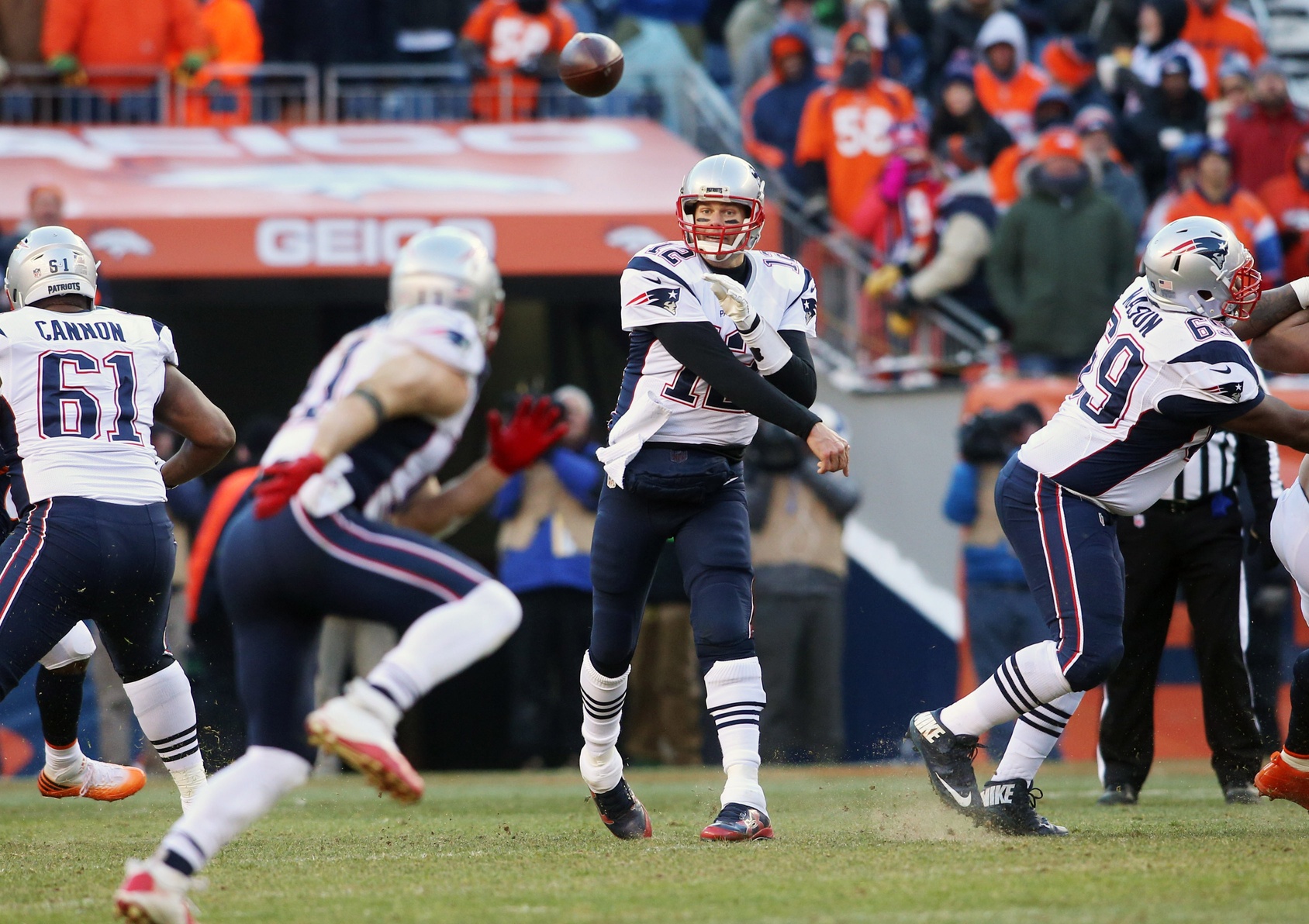
“And I give that credit, again, to the coaches. We practiced in the bad weather every single day, and so we just got so used to it. I just expected 10 to 15 mile an hour wins every time I took the field. I went to domes, and I was like, ‘It’s like this all the time?’ And when you look at dome stats and Dome quarterback. It’s different. There’s probably a three to five completion percentage advantage for the dome quarterback.”
No question.
“The yards per attempt is going to go up. It’s just cleaner football. It’s like shooting a basketball in the wind vs shooting basketball at one of the great arenas here in America. But we’re an outdoor sport. So we were going to play in Buffalo. We were going to play in New England. We were going to play in the Meadowlands. Those are three outdoor stadiums in the Northeast. Then you had the other teams you knew you’d play. So Bill would just make sure we got out there and played in any condition.”
” I knew exactly what I had to wear in every single climate that we were going to play. I didn’t have too much on. I didn’t have not enough on. I always had the right amount of hand warmers in my muff. Just because if it was really cold, I didn’t want to have six hand warmers, and I wanted to have one or two. Unless it was really cold, then I want to have four or five. I just knew every degree of temperature, what I needed to wear for my sleeves, how early I needed to get out and prepare. Again, that continuity allowed me to do a lot of different things.”
It’s like institutional knowledge. You could literally pull stuff. Edelman’s told me that. He’s like, It’s amazing when you have the same coaches and the same… It’s like almost military when you have the same corporate leaders.
“I like to think of it as if it’s a football field. Every team is starting at their own one-yard line. A lot of times, the Patriots, we felt like we were starting at the 30-yard line because we had continuity. Now, we weren’t starting on their side the field. We had a long way to go. But because the continuity, that was really so much of our success as time went on. It didn’t always have to be the players. A lot was the players.”
“We had a lot of great culture drivers of our team. When I think later in my career, Devon McCourty and Patrick Chung and Steph Gilmore and James White, a lot of the guys up front in the offensive line early in my career was Bruschi and Vrabel and McGinist and Larry Izzo. There were so many great players I played. I got to see a lot of them last week. We had so much fun just reflecting on all the time that we spent together because those were some of the most joyous moments we had in our life.”
“There was such a freedom to go out and just play the game that we loved. It was just a magical time in all our lives. You try to recreate that in other places, but it’s very difficult because everyone does something a little bit differently. We just had a really unique culture there at the right time.”
What percentage, when he comes on this show, what percentage of Edelman stories are true?
“They’re mostly true, often embellished. That’s part of Julian. Julian has actually become a great storyteller. I think he’s approached media a lot like he approached the NFL, and you think he’s gotten really good at it. I think he’s done a… No one’s going to outwork Julian. Julian’s always going to put the time in.”
“He’s going to try to suck up all the information he can from people to try to use it. He’s got a great personality, and he always did as he played, too. He was someone that was… Julian got tight, but then he had this volatility between being very tight and rigid and then very relaxed and loose. We’ve seen the loose part at the Fox Outings quite a bit.
Yeah, no, he’s one of my favorites.
“I think a lot of my friends can attest to that that are here today.”
Hey, I’m late. I got bosses looking at me.
“Yeah, don’t get in trouble.”
I already am.
“I don’t want to get in trouble either.”
I already am. You’ll be fine. I’m in trouble more often. Great seeing you.
“Thanks. Great to be with you guys. ”
Here’s the full video:
(Editor’s Note: This transcript is done via the available footage and is subject to typos. If you spot something, please take a moment to let me know in the comments below.)
Support Us: Help Us Compete Against The Corporate Media Giants
We need your help. If you enjoy our content, please help us beat Google's Corporate algorithm by adding us as a preferred source on Google News.
Click the button below and check the box next to "PatsFans.com"
Add as a preferred source on Google News
Ian Logue is a Seacoast native and owner and senior writer for PatsFans.com, an independent media site covering the New England Patriots and has been running this site in one form or another since 1997.
More Patriots News Headlines:
TRANSCRIPT: Mike Vrabel Press Conference 7/30
By: Ian LogueHere's the full transcript of what New England Patriots head coach Mike Vrabel had to say during his press conference on Thursday, July 30, 2026.
MORSE: Notes From Patriots Training Camp Day 4
By: Mark MorseAnalyzing Day 4 of Patriots training camp, Kayshon Boutte shines w/Drake Maye, Christian Gonzalez contract talks, and Gabe Jacas's injury mystery deepens.
Morse: Notes From Patriots Training Camp Day 3
By: Mark MorsePatriots training camp Day 3 notes reveal Gabe Jacas's rare injury waiver contract, plus updates on AJ Brown, Kayshon Boutte, and depth chart battles.
Monday Afternoon Patriots Notebook 7/27: Boutte Continues Making a Case, Interesting Jacas’ Contract Detail
By: Ian LoguePatriots training camp: Kayshon Boutte shines for Drake Maye, Caleb Lomu impresses, Hunter Henry's future, Gabe Jacas's contract, and A.J. Brown's health.
TRANSCRIPT: Mike Vrabel’s Press Conference 7/27
By: Ian LogueHere’s the full transcript of what New England Patriots head coach Mike Vrabel had to say ahead of the start of training camp on Monday,…