

Registered Members experience this forum ad and noise-free.
CLICK HERE to Register for a free account and login for a smoother ad-free experience. It's easy, and only takes a few moments.MassLive | Posted: 06/10 👁: 55 |
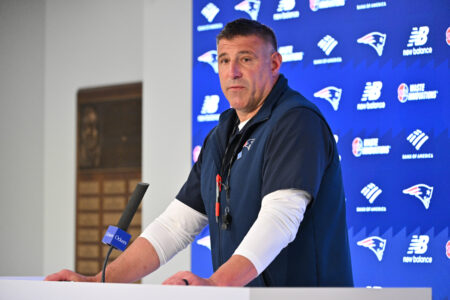
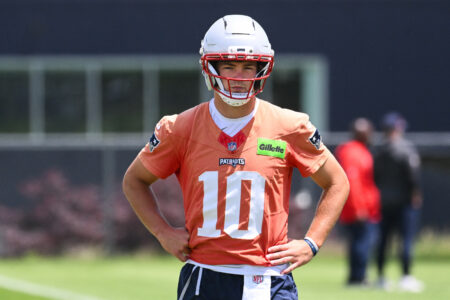
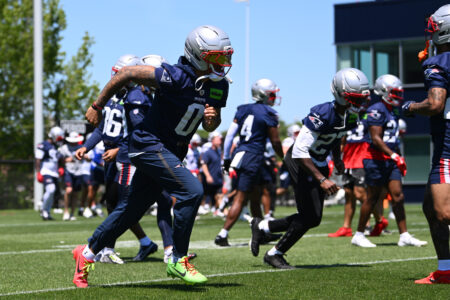
| 5 takeaways from Day 2 of Patriots minicamp as Drake Maye connects with A.J. Brown |
MassLive | Posted: 06/10 👁: 31 |
| How an A.J. Brown miscue led to moment of unity for entire Patriots roster |
MassLive | Posted: 06/10 New! |
| Patriots QB Drake Maye’s already building chemistry chemistry with A.J. Brown |
MassLive | Posted: 06/10 👁: 20 |
| What Josh McDaniels wants to see more of from Patriots WR DeMario Douglas |
MassLive | Posted: 06/10 New! |
| Why is Drake Maye being deluged with more Tom Brady film? |


| Mandatory Minicamp 6/9-11 2 Reactions | 06/11 at 1:45 am |
 | JETS SUCK 2025 EDITION (OFFICIAL): DIVINE INTERVENTION DENIED 1 Reactions | 06/10 at 8:21 pm |
| TODAY'S TOP POSTERS: | # | |
 | captain stone | 6 posts |
| OldEngland | 2 posts |
 | Ice_Ice_Brady | 2 posts |
 | patfanken | 1 posts |
| neckroll#14 | 1 posts |


From our archive - this week all-time:
May 27 - June 11 (Through 26yrs)