




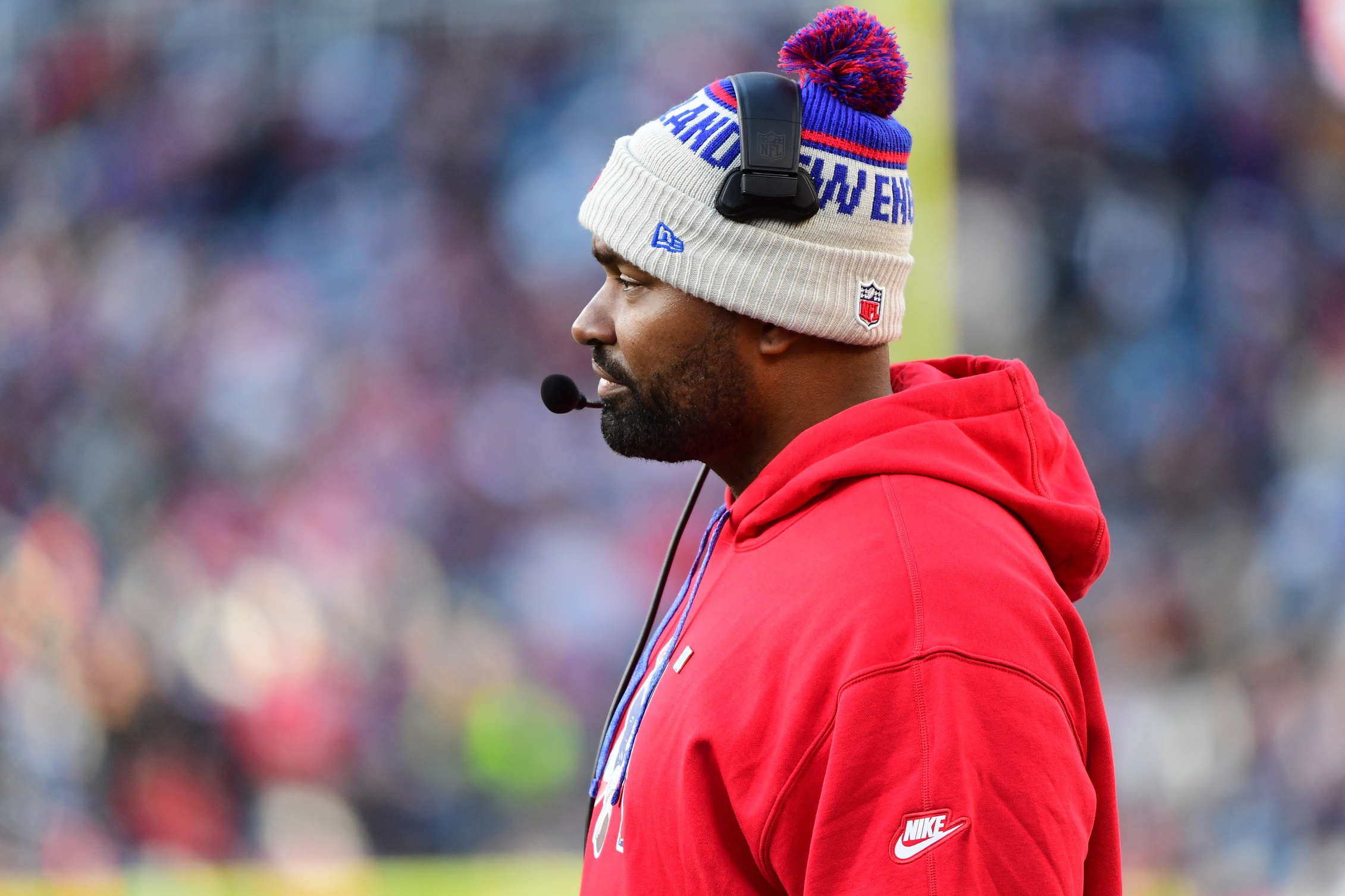
NBC Sports Boston’s Tom Curran recently sat down with New England Patriots head coach Jerod Mayo in an interview for Curran’s Patriots Talk Podcast, and here’s a full transcript of that interview:
TC: Hey what’s up everybody. Welcome to Tom Curran’s Patriots Talk podcast. We have Patriots head coach Jerod Mayo. How are you doing my friend?
JM: Former member of Quick Slants.
TC: The Quick Slants team.
JM: Didn’t we win some awards for that show?
TC: Yeah, we got an Emmy or two. Back in the day.
JM: There you go. Toot your own horn.
TC: I don’t know if we’re going to have any awards this year for the 2024 Patriots, but you’re building and you’ve made that very clear all year long.
JM: For sure.
TC: Has this been harder than you expected?
JM: I don’t think so. You know, every day has been a different day. You know, when I first accepted this position, I knew we were going to take our bumps and lumps along the way. And that’s what we’re in. And, you know, I would say oftentimes it’s hard for people to see the vision or the direction that you’re trying to take an organization, you know, through the clouds. We’re going through clouds right now. But as long as our focus is on setting a foundation and getting better every week, I feel pretty good about it.
TC: You know, it’s funny. Robert Kraft talked at the owners meeting, and he said, I hope we don’t struggle.
JM: Yeah.
TC: There have been occasions in which you guys have struggled.
JM: That’s right.
TC: How hard is it to maintain that resiliency when the struggles hit and to make sure that the vision is consistent not just for you, but that it threads through the coaching staff, threads through the players?
JM: Yeah. My mantra to the guys is that every time we get in, win, lose, or draw on Wednesdays, we turn the page, and I will say, let me rewind a little bit. When you talk about vision, oftentimes people, you know, it’s like the coach’s vision or the owner’s vision. But I truly believe in a shared vision. And we had those conversations early on. And when I say we, you know, the captains, the players, you know, because when times do get hard, if it’s just my vision, it’s real easy just to throw it away.
TC: Right.
JM: And now that they feel like they are stakeholders in the vision, that’s why you are seeing guys continue to play hard, even though the wins and losses may not fall where they are.
TC: Where is their vision? Where have you altered your vision based upon what some of the feedback that you’ve gotten from guys like a Deatrich Wise, or whoever?
JM: Yeah, I won’t get too much into those types of conversations, but, you know, we have this red star all over the building. And I tell the guys, always focus on the red star, and the red star is winning. And so if it doesn’t have to do with winning, then we probably shouldn’t be doing it. And that’s, I mean that’s the mantra. And we’re pushing that way.
TC: As you took this job. You spoke about moving the culture forward, but obviously you have the responsibility for the most successful professional sports franchise, really in American pro sports history, in my estimation. How hard has it been to keep one foot in the past, respecting all the things that you were about bringing some of those forward and then still bringing this team into the rest of this decade?
JM: Yeah, I’ve been very open about it. I’ve learned a lot from I learned a lot from Bill and those staffs of the past. In saying that, you know, wanting to push forward, you know, it’s a different player, it’s a different coach. And for me, it’s about, look, we have very competent coaches. We have competent players. They’re able to understand the X’s and O’s, but you also have to figure out what lever to pull to get these guys going. And look, we do look in the past, and we respect the past. But at the same time, we have to be where our feet are. And in saying that, the hard part is with Eliot [Wolf] and myself is also kind of looking out of the front windshield on what we have. And I’ve been very open too like, we can’t get to the end of the year and not know what we have. And that can be first-year or second-year players. But as we continue to build out the roster and continually trying to improve the roster, those are the thoughts that we have.
TC: You got to have hard discussions with your staff to on the same thing. Like where do we need more manpower?
JM: That’s right.
TC: Where do we need to change our vision for what we thought we’d be? You got hit with a fleet of injuries defensively to secondary to second level to [Christian] Barmore. You got you lost your leader in David Andrews.
JM: Yeah.
TC: How do you have to alter your vision for your coaching staff and who you want to be defensively? Because that – I mentioned Andrews didn’t need him in there because I was focusing on defense – but do you have to change who you might want to be defensively?
JM: Oh we do. And that’s part of it. We always tell the backup players to prepare as if you are going to be the starter at any given time. And I would say, for the most part, the guys have done that. But in saying that, we’ve had our ups and downs, whether you’re talking about the run game or the pass game, we’ve had our ups and downs throughout the season. And it is frustrating, especially when we played good defense for such a long time. In saying that again, I’d like to see the growth and development of a, let’s call it Christian Elliss, some of the rookies in the back end to see that growth and development. You may not see it right now, but as we continue to go forward, they’ll become players in this league.

TC: I’m a big fan of Dirty Dell Pettus. We don’t have to get into Dell Pettus, but I think he is a good player.
JM: He is. And that’s another one, you know, another guy. And we’re only talking about defense right here. But if you even flip to the offensive side of the ball, and I know people get frustrated with lack of production here and there. But you have two receivers. Well you have Baker, you have Polk, you have Layden Robinson, Caedan Wallace, all of those guys, we want to push him out there and again, in an effort to know what we have in the offseason.
TC: Can you be if necessary, for lack of a better word, a hanging judge? If you say, ‘Look, it’s not working.’ I mean, Bill sometimes would be that way. And I hate to invoke Bill, but if a guy was drafted highly, there is an attachment that you develop with that guy. ‘We want to be right here. Yeah, we’ve got to be right?’
JM: Yeah. To me, you know, this is a performance based business, and we’re … I still remember walking into the locker room, you know, my first day in the locker room, and Tedy Bruschi had that first locker. That first locker is very special in there. And he said ‘Hey what do you want to do? You know, as a player, what do you want to become? What do you want to do your rookie year?’ And I said, ‘You know, I want to just help the defense and I want to get 100 tackles.’ And he laughed at me and said, ‘Just remember this. You’re closer to the end than you are to the beginning.’ And that was my first day there. And I still feel the same way now. And this is why we try to coach so hard. This is why we try to develop. Because, look, you’re always – or we are always – trying to improve not only the players but also the coaches.
TC: There’s times when people in the media will say, ‘You know what, it’s not a talented team. It doesn’t play smart and they’re frequently not well coached.’
JM: Yeah.
TC: Is that hurtful? Is the media scrutiny hurtful? I mean, you got relationships here. But there’s the necessity, as transparent and helpful as you’ve tried to be to the media, we still have to do the objective nature and say, ‘That sucked.’
JM: And I appreciate true journalism. I always have. As long as these are truthful or, you know, there’s some backing behind it, some reason – I’ve been very open with, like, if you have a question, I’ll answer it as much as I can. And in saying that, you know, this is what I tell my coaches. It’s a big difference between noise and signals, right? Noise and signals. Noise is just all the chatter. People trying to figure out different things. But there are times that you see signals in articles. And once again, I ignore it. So Bobby handles all this stuff. But there are certain times that, you know, there are signals that come through the players voices when they talk to you guys. And the same thing to me. For me, when I talk to you guys, I know for a fact that the players are reading all that stuff. So I use that platform as another mechanism really to get the message across. Or, you know, as a coach, you are pretty much, you’re a teacher and really you’re a professional reminder. And I just use that as another way of getting the message across.
TC: Do you ever notice how often we’re right?
JM: Like meteorologists. You know … but honestly, look, we got killed, and this is I understand media because once again, we won a couple of Emmys, I understand media and I understand the frustration of the fans. You know, even at the beginning of the season when we didn’t start Drake, everyone was up in arms. ‘Oh, they should have did this. They should have did that.’ ‘You know, Jayden Daniels is starting.’ ‘Caleb Williams is starting.’ ‘All these rookie quarterbacks first-round rookie quarterbacks are playing.’ And it would have been very easy if I heard all of the noise to really go against the plan that we talked about in a time of peace. And when I say in a time of peace, that’s when you don’t have all these people in your ear, you know, telling you what to do. And look, I think right now everyone’s like, ‘well, maybe that was the right move because he’s playing at a high level and saying that he still has a lot of room to grow. But at the same time, we felt like this is the developmental plan for the starting quarterback, the most important piece on the team, and we feel like we’re in a good place.
TC: I’m glad you brought that up because I wrote this week, after this most recent loss against the Colts, that when you guys got the ball at the 48 with eight minutes left, ran the ball two times into the line, punted, and then they got the ball, and you know the rest. I said, ‘Man, that’s the first time in the entire game they ran the ball two times to open a drive. They were trying to bleed the clock.’ Your best player, in my estimation, is Drake. Why not just let him cook? Why not just go for the attack at this juncture? It’s a team that is struggling to get wins. And I was wondering why no attack mentality? Have you been introspective and said, ‘Man, are we too cautious here?’ Why would it be that way?
JM: I always try to reflect, you know, after the games and, you know, now we’re in the bye week. So there’s definitely a chance, an opportunity to reflect on the entire season up until this point and what we need to do going forward. Now, in saying that, I still have a lot to learn as well as the head coach of this football team, and I understood that, you know, it’s a very different role. In saying that, I tell the players the same thing. ‘The biggest jump you’ll ever have in your career is from year one to year two.’ As far as becoming a better player, a better professional. I’m sure 100% I will be a better coach in year two than I am in year one. I would also say there’s, you know, when you’re out there on the field, like for me at least, I’m always trying to do what’s best for the football team, and we’re always trying to win every single game. Now, in saying that, are there times where we could have been more aggressive or not? Absolutely, absolutely. But in saying that, it’s almost like if you…
TC: You’re damned if you do, damned if you don’t.
JM: Yeah, pretty much. I didn’t know if I could say that word on this show. I can say, damn? Oh, fantastic. Fantastic. No. But seriously, like, even look at the two point conversion conversations.
TC: Hated that. Hated that. Hated that. Get the win.
JM: No, I understand. But again, though, if we if we make the two point conversion, everyone’s like it’s genius. And so for me, once again, ignoring everything on the outside, all the noise and really paying attention to the signals and understanding where I’m personally coming up short. And I always get up there and take 100% accountability for everything that we do, every decision that is made on the football field, the decisions that are made as far as the roster is concerned in conjunction with Eliot. And I appreciate ownership, really letting us build this thing out the way that we want to.
TC: How often is there dialog with Robert or Jonathan in terms of, ‘Hey, you know, what? Wasn’t what we were looking for, but we trust you, we’ve empowered you, and we’ll talk about it.’ How does it go, I guess? Yeah, I mean, they’re very invested. Literally.
JM: Yeah. That’s right. Look, we speak all the time, and I would say, you know, even outside of football, they have other businesses. And so when you talk about all this stuff, it’s about relationships. Coaching is about relationships. Business is about relationships. And they’ve been an open book as far as if I have a question on managing processes or, you know, leading people, they have been very open and honest with me in some of those things. And, you know, it’s going to make me a better coach going forward.
TC: Last question before we take a quick break. How does it go after a game? Do they say, ‘Why didn’t you go for two?’ Is it that blunt or what was the thought process?
JM: We always we always debrief the games. And they’re very – they just want to know at least my thought process. And they absolutely, just like the fans, sometimes don’t agree with the way that the game is going. You know, obviously, when you lose games, the questions are plentiful.
TC: pointed very pointed.
JM: That’s right. That’s right. And again though as the head coach, like I have to be able to answer those questions. And my job is not only to protect the coaches, but also protect the players. And that’s why I try to take 100% accountability.

TC: I got my glasses on because I have the suggested questions from my boss, Kevin Miller here. You ready for these?
JM: I’m ready, I’m ready.
TC: We had some fun on Quick Slants.
JM: 100%.
TC: What was your favorite Quick Slants moment?
JM: When I taught you how to play offensive tackle and kick step. And you couldn’t do it because you’re not that athletic.
TC: Well, it’s funny. And you also once said to me, this was maybe the meanest thing ever, you were beaten at birth, not physically beaten, but he was trying to make the point that genetically I was doomed. And facts is facts.
JM: I blame your parents.
TC: I am a B+ recreational recreational athlete.
JM: Well, I still… So going back to going back to, you know, when I would come in the studio, and you would come in with your gym bag and his basketball clothes. ‘Oh, I’m going to play some hoop, I’m going to play some hoop.’ And it looked like you were just straight out of the 85 Eastern Conference Finals, with your short shorts and your headband and all that stuff. But, you know, those were good times.
TC: Do you know what? I could still slash and distribute if I have to? Let’s get into a little rapid-fire stuff if you want to.
JM: Yeah, let’s do it.
TC: All right, here we go. First up. one non-football thing that you’ve been looking forward to this bye week.
JM: Oh. That’s tough. It’s a bye week for the players. A mini bye week for the coaches. I don’t think it’s a bye week for me, but I would say one thing. I’m just looking forward to spending time with my family. Like, I mean, you know, during the season, it’s hard to to be around them and, you know, because you come in early and you leave late. So that’s what I’m looking forward to.
TC: Is this a 24-seven, literally, job right now for you? Do you dream it? Like I dreamt the other day that Alex Van Pelt got hired as head coach of the Colts, and you guys were looking for an offensive coordinator. That’s a freaking dream. And I don’t even coach. Do you have constant mind worrying on this?
JM: I do, I do, and I always think about, you know, how do we make the processes more efficient and then how do I do a better job leading not only the players but also the coaches?
TC: It’s funny too, because like, we spend a lot of time talking about mental health, culturally. And it’s beneficial. And I look sometimes in these locker rooms, and some of the players are younger than my kids – This isn’t very rapid-fire, by the way – and I look like at a Ja’Lynn Polk or a Javon Baker, and they’re getting lit up, and I say to myself, ‘They’re only 23. They’re younger than my kids. They don’t know what they don’t know.’ How important is it for not just them, but for you and even older coaches, to protect their mental health? How do you take a break? Not protect, how do you take a break and just take that time for yourself?
JM: Just leave the phone somewhere far away. You know, the whole social media dynamic of things … now, you can’t sit there and say, all right, get off social media. But what I’ve found is that when the players or even my kids or people I’m close to, what really hurts them is when they go through the comments. And I always tell them, like, ‘Don’t go through the comments.’ Like Joe Schmo, like him telling me that I’m terrible. I mean, that’s his opinion. What I do know is not everyone’s a Patriots fan. Not everyone’s a Jerod Mayo fan. But winning cures all. Winning cures all, as far as, you know, just dealing with the trolls.
TC: Joe Mazzulla is someone you developed a friendship with. Yeah. Has he been a resource for you, Celtics coach?
JM: Yeah, he’s been great. He’s been great, actually. You know, Joe and I met a few years ago before he was even the head coach. And he sat in, you know, all the defensive meetings. And we just formed a bond there. And I was just so happy for him when he got the opportunity. And to go out there and really, you know, win a championship, is definitely a model that you know, I want to follow.
TC: Do you consult them about things like social media or how do you slice off some time for yourself, or do you keep that stuff inside? Like that? That mental health thing is interesting because you and I have spent so much time talking in the past.
JM: That’s right.
TC: And you don’t want to bare your soul on a frigging podcast. But on the other hand, too, how do you do it?
JM: You have to talk to people. You have to have a trusted circle of people that you can bounce ideas off of, or they’re, you know, good sounding boards for you. You know, oftentimes with mental health in general, it’s more we’re not as proactive as we should be just as a country. In my opinion, it’s more reactionary. All right. You know, this guy had a meltdown. But what led up to that? And I always check in on the guys. I tell them straight up, ‘Not about football. How are you doing?’ Or the how are you doing? It kind of gets weird because everyone’s like, ‘I’m good, I’m good.’ Especially with men. ‘I’m good, I’m good, I’m good.’ I think a better question is like, ‘How are you sleeping at night?’ And that’s where it starts to tease out.
TC: After a bottle of whiskey.
JM: Yeah, right. But honestly, it starts to tease out like the answer. Now you got to have time. You know, most of the time when you say, ‘Hey, how are you doing?’ You really hope this person doesn’t, like, go down this rabbit hole. But the people that you care about, just ask them that question, like, ‘How are you sleeping?’ And you’ll see how, just that answer you get back, it’s interesting.
TC: Um, I notice you’re a challenge flag in the sock kind of guy. Had you given a lot of thought to any other places or areas that you can keep that?
JM: Yeah. The problem is, well, the pants, the pants are pretty tight. And as well, I have…
TC: That’s that’s a choice.
JM: But no, I’m in between. I’m an athletic build. It’s hard to get athletic build. You don’t have to worry about that. You just get the bad build section. No, but what I would say is, you know, I like to put it in my sock, and I have my notebook in one pocket and maybe some heat packs, some gum in another pocket.
TC: Okay. Are you still doing that weird stuff with the ice showers?
JM: Still do it.
TC: Why? Listen, just explain what you do.
JM: Yeah. I take cold showers every morning, and now it’s starting to actually become popular with the cold plunge. I’ve been doing this for a long time, and for me, it’s about just starting the day off with a win and being able to get that victory. I don’t like taking cold showers at all, but I need to counter just that innate ‘I want to take the path of least resistance all the time,’ and turning that water all the way cold helps me wake that muscle up. And you know, that’s what it comes down to is mental toughness.
TC: I should have been able to tell my dad that when they immigrated over from Ireland, and they were probably taking cold showers. ‘Dad, you’re starting the day with a win!’ I’m dying in here.
JM: Well, other people, you know, like, ‘Make your bed’ and, like, all those…
TC: The ‘Make your bed’ works.
JM: No, I understand, and you know what else works for actions is counting backwards. That’s our lady friend. I forgot her name. You know, if you’re kind of nervous about sending that email, just count down. ‘Five, four, three, two, one.’ Just click the button. Just send it.
TC: Fair enough. Any music you go to on game day?
JM: Not really. Not really. As a player, I used to always listen to music.
TC: Such as.
JM: Everything, something. I just wanted it to be up-tempo.
TC: Tom Brady used to say ‘Everything from Frank to 50.’
JM: There you go. Up tempo. Ready to go.
TC: All right. I had a Tom Brady question here, but it might be tampering. So we’re not going to go with that. But, instead we’ll go with that very simple one. Who was your favorite elementary school teacher?
JM: Miss Brown in first grade. And she just, you know, she made the boring things fun, which, I definitely appreciated.
TC: Favorite book, he recommended to me…
JM: Atomic habits.
TC: You like atomic habits?
JM: I do. Inner Game of Tennis. I like that book also. Had nothing to do with tennis.
TC: Recommended to me, also recommended to his mother, The Simple Art of Not Giving a *bleep.*
JM: Yeah, that’s another one.
TC: And Untethered Soul.
JM: Untethered Soul is a great book.
TC: Tremendous book. Which one do you consult? You know what I gave to my kids when they were in high school? The Obstacle is the Way.
JM: Okay. I know that one, too. Being a stoic.
TC: By Ryan Holiday.
JM: Yeah, yeah. He actually sent me a bunch of his books, which I appreciate.
TC: We’ll close with this. How much has resilience and understanding that the obstacle is the way contributed to this year? Can you tap into some of that stuff? Because there’s been a lot of obstacles, my friend.
JM: No doubt. No doubt. I always tell the guys, you know, you have to make the hard decisions to have an easy life, and then vice versa. If you make the easy decisions, you’re always going to have a hard life. And I live that way. Make the hard decisions. It’s hard. You know, in this role it’s hard, especially right now. It’s hard. But we’ll get out the other end.
The above is also subject to typographical errors. Any issues or questions, please let me know in the comments below.
Support Us: We're Currently Invisible in Google News
We need your help. A recent algorithm change has destoyed our traffic, and we need a quick moment of your time.
If you enjoy our content, please help us gain visiblity in Google's algorithm by adding us as a preferred source on Google News.
Click the button below and check the box next to "PatsFans.com"
Add as a preferred source on Google News
Ian Logue is a Seacoast native and owner and senior writer for PatsFans.com, an independent media site covering the New England Patriots and has been running this site in one form or another since 1997.
More Patriots News Headlines:

Patriots Finally Trade Boutte, Get a Player, Draft Pick in Deal with Houston
By: Ian LoguePatriots trade Kayshon Boutte to Houston for a 2028 seventh-round pick and safety Jalen Reed, as new additions left no room for the receiver.

Monday Patriots Notebook 8/24: Patriots Sign New Punter, Gonzalez Returns to Practice
By: Ian LoguePatriots sign punter Matt Haack following Bryce Baringer's injury, with Christian Gonzalez back at practice and contract talks continuing.

Vrabel Sheds Light on Morton’s Punting Appearance, Reveals New Punter is Incoming
By: Ian LogueRevealing Bryce Baringer's injury, Mike Vrabel confirms the Patriots are signing a new punter after Behren Morton's emergency appearance.
TRANSCRIPT: Mike Vrabel’s Press Conference 8/24
By: Ian LogueHere's the full transcript of what New England Patriots head coach Mike Vrabel had to say during his press conference on Monday, August 24, 2026.
TRANSCRIPT: Mike Vrabel on WEEI’s The Greg Hill Show 8/24
By: Ian LogueHere's the full transcript of what New England Patriots head coach Mike Vrabel had to say during his Monday appearance on WEEI's The Greg Hill Show…